










Feb
The Rolex market value spectrum spans from $6,600 entry-level steel sports watches to $140,000+ precious metal dress pieces, with retail pricing shifts of 2–6% in 2026 depending on material and availability. Steel models command tighter premiums over retail due to high demand, while gold and platinum watches show wider secondary-market discounts, reflecting lower demand and higher carrying costs. Understanding where your target model sits within this spectrum—and why—is essential for making informed purchasing decisions.

Looking to liquidate your Rolex for its true market value? We provide transparent, immediate cash offers for both steel sports models and high-end precious metal references.
Executive Summary: The 2026 Tiers
- Steel vs. precious metals: Steel watches maintain near-retail or premium secondary pricing; gold and platinum models trade 5–15% below retail.
- Tiered Price Increases: Stainless steel models see 2.3–3.5% increases; precious metal versions jump 4.5–5.7%, driven by material costs and tariff impacts.
- High Demand Stability: Submariner, Daytona, and Day-Date sustain tighter premiums; low-demand references like the Sea-Dweller show greater secondary slack.
- Entry-Level Anchors: Oyster Perpetual and Air-King sit at $6,600–$8,150 retail.
- Gray Market Reality: Pricing reflects real transaction velocity, not theoretical appreciation.
This analysis reflects observed secondary-market pricing and collector behavior as of 2026. It is intended for buyer education and comparative analysis, not financial or investment advice.
The Reality: The Bifurcation Gap
The secondary market does not move in lockstep with retail pricing. Steel sport watches—especially Submariner, GMT-Master II, and Daytona—often trade above retail because authorized dealers have allocation constraints. Precious metal models, by contrast, frequently sell 8–12% below retail on secondary channels, absorbing a real carrying cost penalty. This divergence reflects actual demand elasticity and liquidity realities.
Reality check: A steel Submariner Date trading at $12,500 on the secondary market while retail sits at $11,200 is not a sign of appreciation—it is a sign of scarcity at retail and willingness of buyers to absorb dealer spreads. The moment retail allocation eases, those secondary prices compress.
Steel vs. Precious Metals: The Core Price Split
Rolex’s 2026 pricing strategy reveals a clear bifurcation. Steel models received modest increases (2.3–3.5%), while precious metal watches jumped 4.5% to 5.7% at retail.
Why Steel Commands Different Premiums
Steel sport watches remain Rolex’s volume engine. Authorized retailers receive regular allocations, and grey-market dealers compete aggressively. Retail price increases are modest because demand is inelastic. On the secondary market, steel models trade near or slightly above retail due to immediate availability.
Precious Metal Pricing Reality
Gold and platinum models sit in authorized dealer windows much longer. Secondary-market holders carry inventory costs—storage, insurance, opportunity cost. The result: a structural 8–15% secondary-market discount on precious metal watches, even unworn examples. A yellow gold Submariner Date retailing at $48,000 in 2026 typically trades at $41,000–$43,000 on the secondary market.

Looking to establish absolute certainty before you list your Rolex? Our master horologists provide forensic-level verification to ensure your watch commands its full market premium.
Rolex Market Value Spectrum: The 2026 Retail Tiers
Tier 1: Entry-Level Steel ($6,600–$11,200)
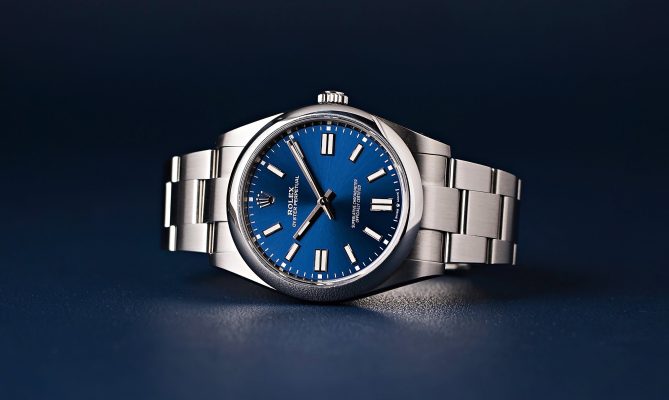
Oyster Perpetual (36mm and 41mm) and Air-King anchor the low end. These are daily-wear watches. Retail: OP at $6,600, Air-King at $8,150. Secondary: Near retail or 2–5% below.
Tier 2: Core Sports Watches ($9,950–$18,900)
Submariners, GMTs, and Explorers. No-date Sub at $9,950; Sub Date in steel at $11,200. Secondary: Neutral to +8% above retail. Two-tone Rolesor versions at $18,900 retail trade at $17,500–$18,200 secondary.
Tier 3: Dress Sports ($14,550–$21,950)
Sea-Dweller, Day-Date (40mm), and Land-Dweller. Steel Sea-Dweller retail: $14,550. Secondary: $13,500–$14,200, reflecting moderate demand.
Tier 4: Gold Dress Watches ($40,000–$54,000)
Day-Date 36mm in gold starts at $40,250. Secondary: $36,000–$42,000. The 10–12% secondary discount is standard.
Tier 5: Ultra-Luxury Precious Metal ($54,000+)
Platinum Day-Dates, gem-set Daytonas. Retail increases are 5–6%. Secondary discounts often exceed 15%, reflecting low demand and high carrying costs for dealers.

Not sure how current market corrections have affected your specific Rolex reference's value? Book a private virtual appointment for a comprehensive valuation.
Demand Trends and Model-Specific Value
Not all Rolex references move equally. – Highest demand: Submariner, Daytona, GMT-Master II (steel versions) → 3–8% premium. – High demand: Day-Date, Sky-Dweller, Yacht-Master (steel) → near-retail to 3% discount. – Moderate demand: Sea-Dweller, Land-Dweller, Air-King → 3–8% discount. – Lower demand: Specialty sports models (Deepsea), niche configs → 8–15% discount. – Ultra-niche: Platinum models → 12–20% discount.
Pricing Intelligence: Lag and Lead
Secondary-market prices lag retail price increases by 4–8 weeks. Sellers often anchor to pre-increase ranges initially, creating buying opportunities for informed collectors. Conversely, surges in demand cause secondary prices to lead retail pricing upward.

Frequently Asked Questions
The Rolex market ranges from $6,600 for a steel OP to $140,000+ for a gem-set Daytona. The true bifurcation sits between steel sports watches (near-retail) and gold/platinum dress pieces (8–15% below retail).
Steel sports watches face retail allocation constraints and high demand. Precious metal watches have lower allocation pressure and higher dealer carrying costs, resulting in 8–15% secondary discounts.
Rolex increased retail prices 2.3–3.5% on stainless steel and 4.5–5.7% on precious metal pieces effective January 2026, reflecting material costs and tariff uncertainty.
Gray market refers to unauthorized new watches sold below retail. Secondary market refers to pre-owned/used/unworn watches traded between individuals/dealers based on condition and demand.
Steel sport watches—Submariner, Daytona, GMT-Master II—hold value most consistently. Day-Date gold holds 10–12% less than retail but remains stable.
Typically 4–8 weeks. Sellers anchor to old ranges initially; after 8–12 weeks, the new retail floor is fully factored into secondary pricing.
No. Rolex watches are for enjoyment. Precious metal versions do not reliably beat inflation. Steel sports watches may trade near-retail due to temporary scarcity, but this is a bonus, not the goal.
A yellow gold Day-Date retailing at $40,250 trades secondhand at $36,000–$38,500 (10–12% discount). This reflects how the secondary market prices dress watches versus sports pieces.
Steel Sub Date at $11,200 retail trades at $11,800–$12,500. Two-tone (Rolesor) Sub Date at $18,900 retail trades at $17,500–$18,200 (4–5% discount).
Expect 5–10% negotiation room on listings over $5,000. 12–15% is reasonable for worn examples; never offer below 8% for unworn condition.
 Free Shipping for all orders