

















Blog
Is the New Rolex Oyster Perpetual Worth the Premium in 2026?
May
The Rolex Oyster Perpetual used to be the cheapest way into a Rolex. In 2026 it is one of the most fought-over references in the catalog, with celebration dials and turquoise variants regularly trading well above retail. The “basic” Rolex is not basic anymore. So the real question for buyers right now is simple: is the new Oyster Perpetual actually worth the premium, or are people paying for hype that will not hold?
See current Oyster Perpetual inventory before paying secondary-market premiums.

What’s New in the Latest Oyster Perpetual
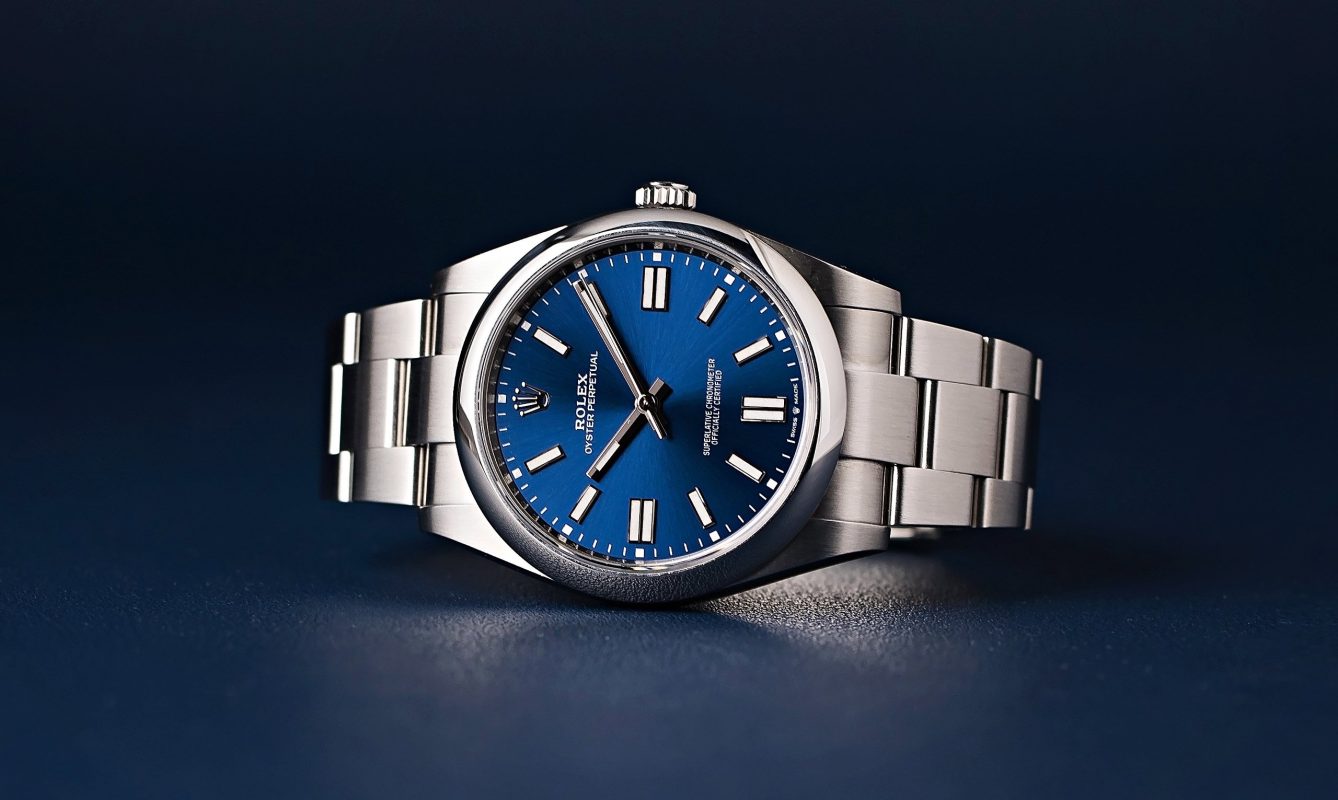
Rolex has steadily reshaped the OP from a quiet entry-level reference into the brand’s color showcase. The current generation runs in 36 mm and 41 mm cases (with smaller 28, 31, and 34 mm versions for women), all on the Oyster bracelet, all with the in-house caliber 3230 movement. The case is sharper, the dial finishing is cleaner, and the lacquered colored dials are what changed the conversation.
The most-requested configurations right now:
- Celebration dial — multicolor bubble pattern on the 36 mm and 41 mm, the watch that turned the OP into a hype reference
- Turquoise (tiffany blue) — the 124300 in turquoise is the headline 41 mm color
- Coral red, candy pink, green, yellow — the color wall that defined the 2020s OP era
- Classic black and silver — the discreet daily-wear options, including the silver-dial Oyster Perpetual
Old vs new in one line: the previous-generation 114300 was a no-date dress-sport hybrid people bought because it was the affordable Rolex. The current 124300 is bought because the dial is a status object on its own.

Why Prices Are Above Retail
Three things are stacked on top of each other and they all push in the same direction.
Scarcity at retail. Rolex authorized dealers cannot keep the popular dials in the case. Waiting lists for celebration and turquoise OPs run long enough that most buyers never see one through retail.
Cultural visibility. The colorful OP became one of the most photographed watches on social media. That visibility converts directly into demand from buyers who are not deep collectors but want a recognizable, in-trend Rolex.
Resale floor. Even when hype cools, an OP holds value because it is still a steel Rolex with the brand’s strongest distribution. The downside is bounded in a way most non-Rolex sports watches in this price band cannot match.
The result is a watch that retails around five figures and routinely trades 30 to 100 percent over retail on the resale market for the right dial color. That premium is not random. It is what it costs to skip the waiting list for a watch the AD physically cannot supply.

Is It Worth the Premium?
This is where the honest split lives.
Why the premium can make sense:
- you skip a multi-year waitlist for the exact dial you want
- you get a watch that has held its value better than almost anything in its price band
- the design is timeless enough that you will still want it in five years
- resale liquidity is high — if you change your mind, the buyer pool is huge
Why the premium can be a trap:
- you are paying mostly for color, not complication — the movement is the same as cheaper Rolex references
- some hype dials are already showing softer comps than peak-week prices
- at 1.5x to 2x retail, you are inside Submariner / Datejust precious-metal territory, where alternatives get serious
- the OP is not a “rare” watch in absolute terms — production volumes are real, even when allocation feels impossible
The honest framing: a celebration or turquoise OP at a sane premium, in full set, is a defensible buy. The same watch at panic-week pricing, with no papers, from an unverified seller, is the version most regretted later.
Smart Alternatives at the Same Price
If you only want the look, fine. If you are buying because you want a great steel watch in this price band and the OP just happens to be the obvious one, look at these first.
- Rolex Datejust — the more functional sibling, with the date complication, fluted or smooth bezel options, and a deeper color catalog. Often closer to retail.
- Omega Aqua Terra — Master Chronometer movement, antimagnetic, available in colors that compete directly with the OP. Trades at retail or below.
- Cartier Santos — same “iconic steel sports watch” slot but a completely different design language. Strong resale and growing collector traction.
- Tudor Black Bay 36/39 — Rolex DNA at a fraction of the price, with movements that punch above the segment.
The reason this matters for the OP decision: if any of those four scratch the same itch, paying 1.8x retail for the OP becomes harder to justify.
The Investment Angle
The Oyster Perpetual is not technically an investment instrument. It is a watch. But the question gets asked enough that it deserves a straight answer.
What is liquid right now: the celebration dial and the turquoise / tiffany-blue 41 mm. These are the two dials that move fastest at the highest premiums.
What holds steady: classic silver, black, and blue 36 mm and 41 mm. Less upside, but also less downside if hype softens.
What to be careful with: chasing a peak-week price on a hype dial without box and papers. The premium relies on full-set status more than buyers usually realize.
Hold or flip: if you bought at retail, you are already ahead — flipping is rational. If you bought at 1.8x retail, you should plan to keep the watch. Trying to flip a heavy-premium piece in a softening market is how the loss happens.

Final Verdict
If you want the Oyster Perpetual for the long term, for the design, and you can secure a clean example at a reasonable premium, the watch holds up. It is one of the most quietly versatile Rolex references in the catalog and the resale floor is real.
If you want the OP because it is the watch everyone is posting right now, slow down. Look at the comps for the exact dial. Check papers. Compare against a Datejust or Aqua Terra at retail. The OP can absolutely be worth it. It just is not automatically worth it at any price.
Frequently Asked Questions
Limited allocation at authorized dealers, strong social-media visibility for the colored dials, and a robust resale floor. Buyers pay a premium to skip waiting lists they realistically cannot reach.
The celebration dial and the turquoise (tiffany-blue) 41 mm lead the secondary market. Coral red, candy pink, and green follow. Classic silver and black are steady but trade closer to retail.
It can be a strong store of value when bought sensibly with full set, but it is not a guaranteed investment. The premium is driven by demand, and demand on hype colors can soften. Treat it as a watch first, an asset second.
The 41 mm carries the strongest current demand and the most colorful dial options. The 36 mm is the more universal size, sits well on most wrists, and tends to age better as a long-term piece. Pick by wrist fit, not by hype.
Officially yes — it sits at the bottom of the Rolex price ladder at retail. Practically no — at secondary-market prices it overlaps with Datejust, Air-King, and even some precious-metal references. The “entry-level” label is mostly a retail concept now.
Short term, the most-photographed dials should stay strong while supply is tight. Long term, expect a partial cooldown on hype colors and a steady premium on full-set, well-kept examples. Quality of the specific watch matters more than the headline trend.
 Free Shipping for all orders