

















Rolex
Rolex GMT-Master II ‘Coke’ 2027: Will Rolex Finally Release the Red & Black Ceramic Bezel?

Sep
Quick Answer: Rolex has officially discontinued the modern GMT-Master II “Pepsi,” leaving its famous red-bezel position vacant. Meanwhile, a Rolex patent describes a monobloc ceramic component specifically capable of producing red-and-black coloration. A 2027 “Coke” remains unconfirmed, but technically, historically, and commercially, the pieces suddenly fit unusually well.
For more than a decade, collectors have asked the same deceptively simple question: if Rolex can manufacture a blue-and-black Batman, green-and-black Sprite, brown-and-black Root Beer and red-and-blue Pepsi, why is there still no modern ceramic Coke?
In 2026, that question became considerably more interesting.
Rolex officially removed the steel GMT-Master II ref. 126710BLRO and white-gold ref. 126719BLRO from the collection during its Watches and Wonders refresh. The modern Pepsi is gone, at least for now, leaving Rolex without a red-accented GMT-Master II in its current lineup.
At almost exactly the same moment, an older Rolex patent suddenly looks less like technical housekeeping and more like a possible roadmap.
The result? The hypothetical Rolex GMT-Master II Coke 2027 has moved from collector fantasy into one of the most intriguing possible Rolex launches of the next cycle.
The Legacy of the Coke: From Ref. 16760 ‘Fat Lady’ to Aluminum Ref. 16710

Before “Batman,” “Sprite” and “Bruce Wayne” became part of collector vocabulary, there was Coke.
Rolex introduced the GMT-Master II ref. 16760 in 1983. Its thicker case quickly earned it the nickname “Fat Lady,” while its red-and-black aluminum bezel became known as the Coke. More importantly, the 16760 marked a technical turning point: it was the first GMT-Master II and introduced an independently adjustable local hour hand.
The combination survived into the slimmer and enormously successful ref. 16710, which Rolex produced from the late 1980s until 2007. Unlike today’s fixed color identities, the 16710 era allowed red/black, red/blue and all-black aluminum bezel configurations.
Then Coke disappeared.
When Rolex transitioned the GMT-Master II into the Cerachrom era, black arrived first. Blue-and-black followed. Eventually came red-and-blue, brown-and-black, green-and-black and grey-and-black.
But never red-and-black.
That absence is precisely why the Coke has developed such an unusually strong collector identity. It is both unmistakably Rolex and conspicuously missing from the modern catalog. Humans, predictably, tend to want things more once manufacturers stop making them.
The Patent Paper Trail: Rolex’s Breakthrough in Bi-Color Red & Black Cerachrom
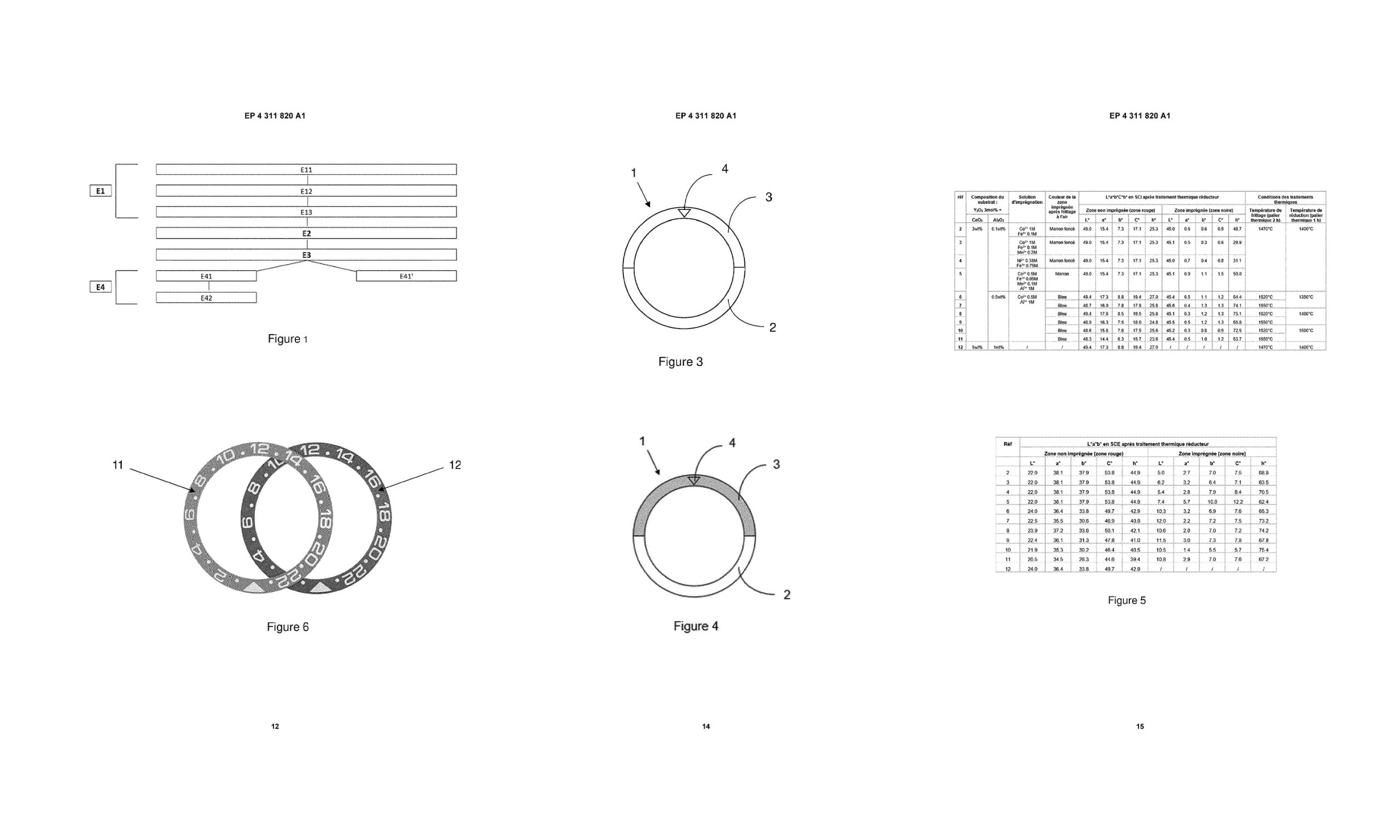
The strongest argument for a future ceramic Coke is not an Instagram render. It is Rolex’s own intellectual property.
A Rolex patent application titled “Manufacture of a Multicoloured Ceramic Component” describes a process built around ceria-zirconia ceramic, local impregnation with a solution containing metallic salts, sintering and subsequent heat treatment under a reducing atmosphere. Crucially, the patent explicitly identifies a monobloc component comprising a red first portion and a black second portion.
That matters because red ceramic has historically been the awkward child at the Rolex materials laboratory.
For the Pepsi Cerachrom insert, Rolex uses an alumina-based ceramic to achieve the red base. Rolex itself explains that its bi-color production process involves selectively impregnating part of a porous ceramic insert with metallic salts and transforming its color during high-temperature sintering. The company says Cerachrom components can be fired at temperatures reaching roughly 1,600°C.
The newer patent describes another route: ceria-stabilized zirconia can be processed so that reduction chemistry produces the desired colors within a single ceramic component rather than simply coating two halves.
That is the critical distinction. A genuine modern Coke would not be red paint next to black paint. The colors would effectively exist within one monolithic ceramic structure, with the sharp boundary Rolex demands.
Does the patent prove a Coke is coming in 2027? No.
Does it prove Rolex has invested engineering resources in a process explicitly capable of producing red and black ceramic together? Very much so.
What the 2027 Rolex Coke (Ref. 126710RONR) Would Look Like: Full Specs Breakdown
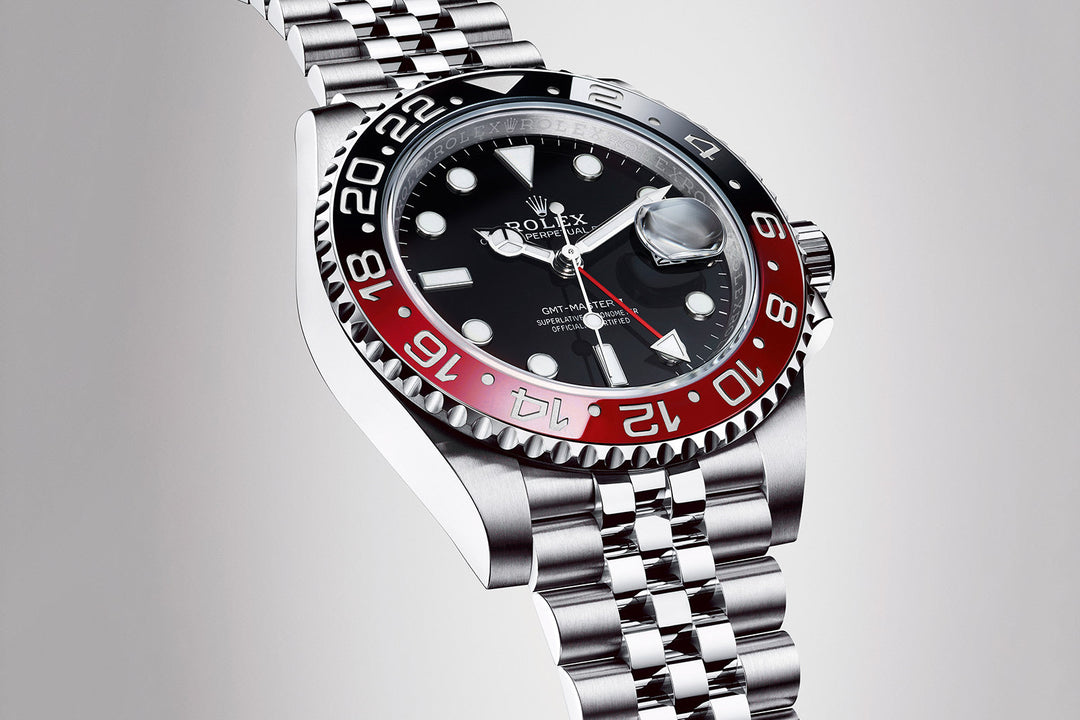
First, one important distinction: 126710RONR is not an announced Rolex reference. It is the logical collector shorthand frequently used for a hypothetical steel Coke, following Rolex’s French color abbreviations. Until Rolex announces such a watch, both the reference and the 2027 launch date remain speculative.
Mechanically, however, the obvious blueprint already exists.
A steel Coke would almost certainly use the current 40mm Oystersteel GMT-Master II architecture with 100-meter water resistance, sapphire crystal, Triplock crown and a bidirectional 24-hour Cerachrom bezel. Current steel GMT-Master II references use the automatic Calibre 3285, offering approximately 70 hours of power reserve, independent local-hour adjustment and a dedicated 24-hour GMT hand. (Rolex)
The visual formula practically designs itself:
- 40mm Oystersteel case
- Black lacquer dial
- Red-and-black monobloc Cerachrom bezel
- Red 24-hour GMT hand
- Chromalight hour markers
- Calibre 3285
- approximately 70-hour power reserve
- Oysterlock clasp with Easylink extension
- 100m water resistance
Then comes the bracelet question.
Rolex currently sells the 126710BLNR on both Oyster and Jubilee bracelets. In September 2026, the U.S. prices are $11,800 on Oyster and $12,000 on Jubilee.
A Jubilee Coke would visually connect the new model with the dressier modern Pepsi era. An Oyster Coke would feel closer to the harder-edged 16760 and 16710 originals.
The most commercially logical answer may therefore be the least dramatic: Rolex could offer both.
Projected MSRP vs. Early Grey Market Premiums

The previously rumored $11,000-$11,500 retail range is now too low. Rolex’s existing steel GMT-Master II already costs $11,800 on Oyster and $12,000 on Jubilee in the U.S., so a hypothetical 2027 Coke would more realistically arrive around current GMT pricing or slightly above it.
The secondary market is where things could become rather less civilized.
| GMT-Master II | Retail / Expected Retail | Sept. 2026 Market Context |
|---|---|---|
| 2027 Coke, hypothetical | ~$11,800-$12,500 | Possible launch asks: $24,000-$28,000+ |
| Pepsi 126710BLRO | Last retail around $11,800 | ~$21,700-$22,700 market estimate |
| Batman/Batgirl 126710BLNR | $11,800-$12,000 | ~$17,000-$18,300 |
| Bruce Wayne 126710GRNR | $11,800 | ~$20,300 |
WatchCharts currently values the discontinued steel Pepsi around the low-$22,000 range depending on bracelet, while marketplace listings extend considerably higher. The BLNR trades around the high-$17,000s, and the GRNR is around $20,000.
Luxury Watches USA’s own current inventory illustrates how asking prices can stretch beyond model-level estimates: listed 126710BLRO examples currently include an Oyster model at $27,900 and a Jubilee example at $33,600.
That makes a $24,000-$28,000 opening grey-market range for a brand-new Coke plausible rather than outrageous, particularly during the first months of scarcity. It remains a projection, not a guaranteed future value.
5 Frequently Asked Questions About the 2027 Rolex Coke Rumors
1. Has Rolex officially announced a GMT-Master II Coke for 2027?
No. As of September 24, 2026, Rolex has not announced a ceramic Coke GMT-Master II or confirmed the reference 126710RONR.
2. Is the Rolex Pepsi really discontinued?
Yes. Rolex removed the steel 126710BLRO and white-gold 126719BLRO from the collection during its 2026 refresh, and Rolex confirmed their discontinuation.
3. Does the Rolex patent specifically mention red and black ceramic?
Yes. The patent documentation explicitly describes a monobloc ceramic watch component that may comprise a red portion and a black portion.
4. Why didn’t Rolex simply make a ceramic Coke years ago?
Producing clean, durable colors within monobloc technical ceramic is considerably harder than swapping aluminum inserts. Rolex’s own technical material describes carefully controlled impregnation, chemical transformation and sintering processes for dual-color Cerachrom.
5. Could Rolex revive the Pepsi instead of releasing a Coke?
Certainly. The Coke theory fits the engineering and product-line logic, but a patent is not a product announcement. Rolex could use the technology for another reference, delay it for years, or never commercialize the specific red/black configuration.
Explore In-Stock Rolex GMT-Master II Models at Luxury Watches USA
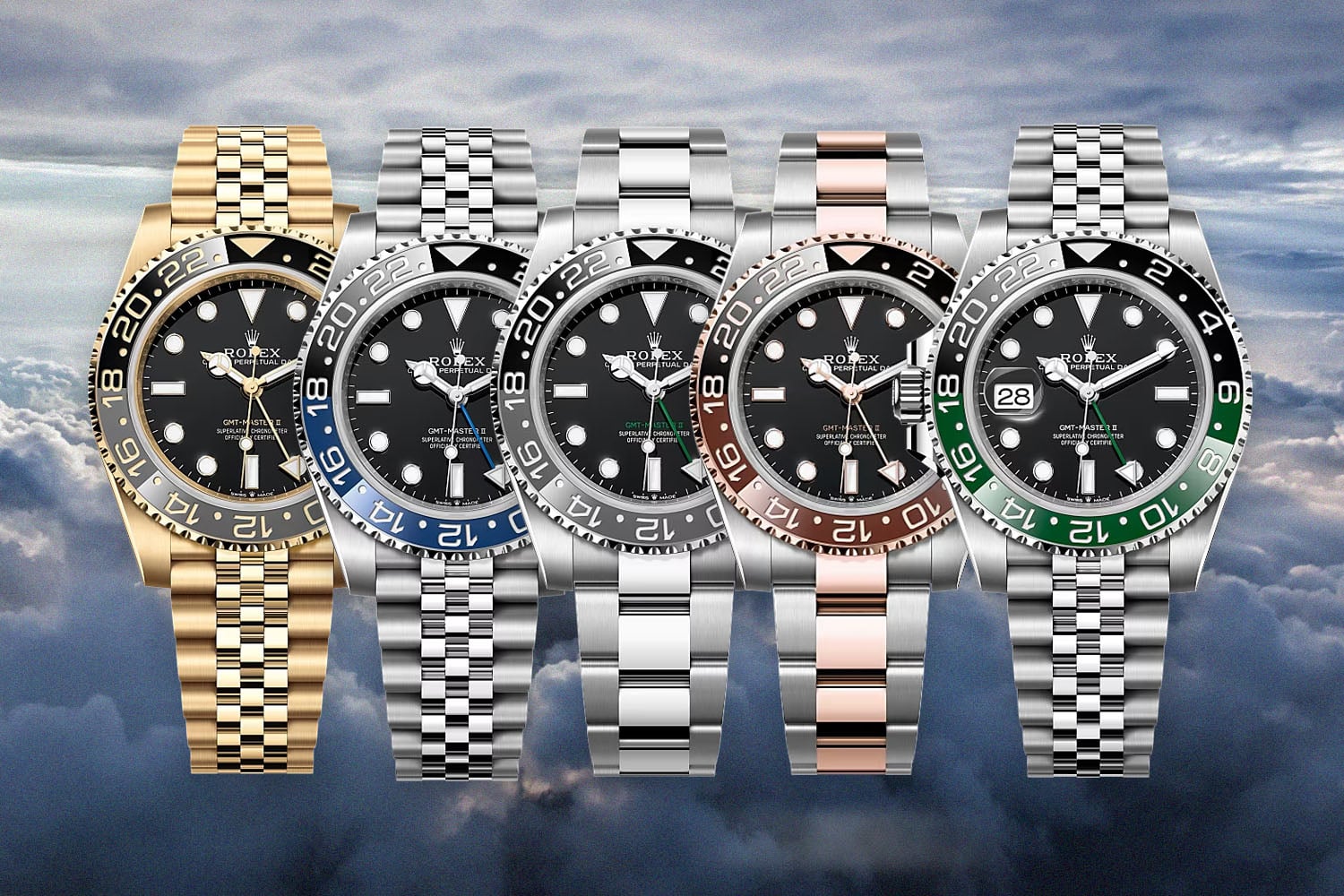
Whether the Coke arrives in 2027 or remains the most expensive watch the internet has collectively imagined into existence, the broader GMT-Master II market is already moving.
Luxury Watches USA currently lists modern and discontinued GMT-Master II references including the Pepsi 126710BLRO, Batman/Batgirl 126710BLNR, Sprite 126720VTNR, Root Beer and GRNR configurations, alongside vintage GMT models.
Browse the full Rolex collection or shop available Rolex GMT-Master II watches.
The central question is no longer whether Rolex possesses the technical vocabulary to manufacture a red-and-black ceramic GMT bezel. Its patent work indicates that it does.
The question for 2027 is much more interesting:
Now that the Pepsi has left an empty red-colored seat at the GMT-Master II table, what exactly does Rolex intend to put there next?
 Free Shipping for all orders