

















Blog, Rolex
Rolex Datejust vs. Oyster Perpetual in 2026: Which One Justifies the Secondary Market Premium?
Sep
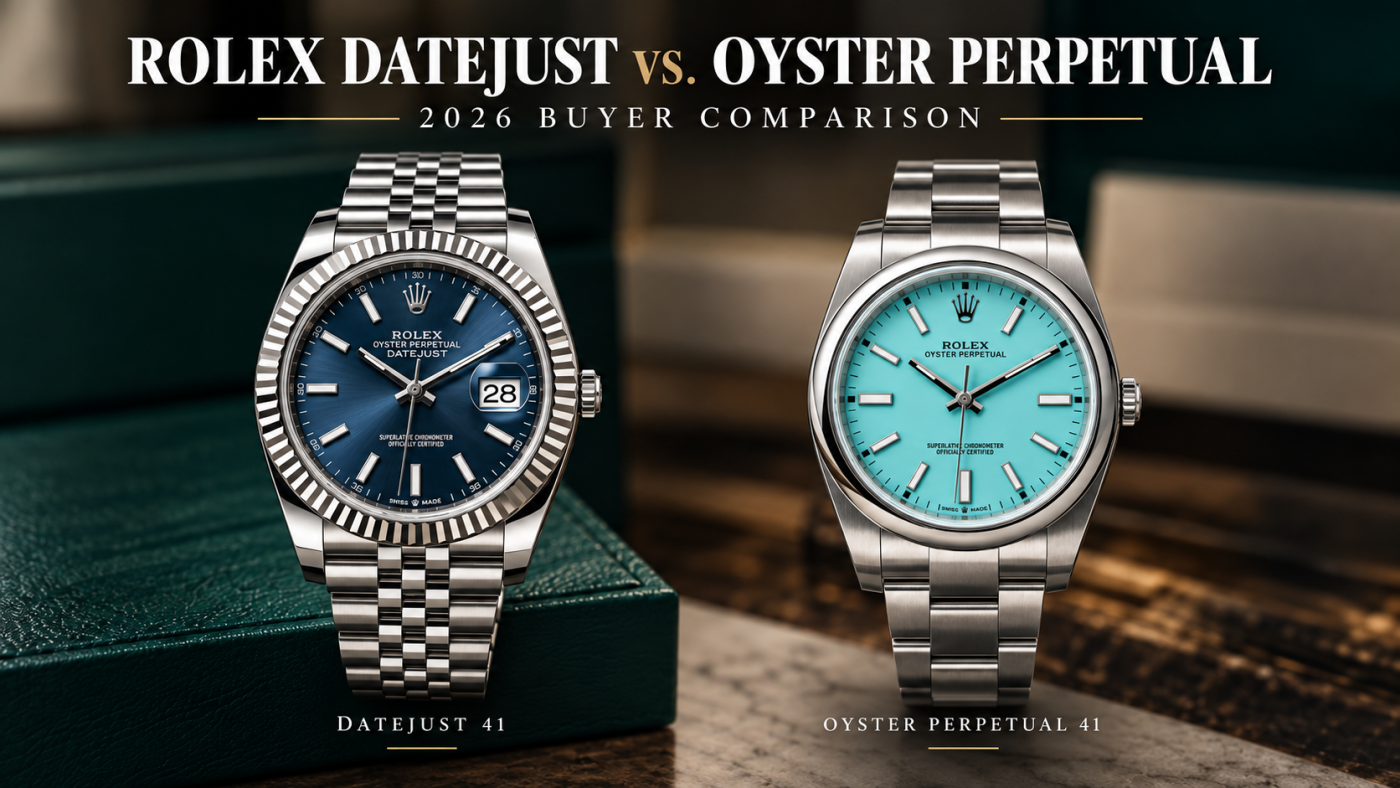
Quick Answer: In 2026, the Datejust 41 Ref. 126334 offers more watch for the money: an 18k white-gold fluted bezel, date complication, Cyclops, and two bracelet choices. But discontinued Oyster Perpetual 41 Ref. 124300 Turquoise and Celebration dials command much larger scarcity premiums, making dial rarity, not mechanical complexity, the decisive pricing factor.
One important 2026 detail: the Oyster Perpetual 41 Ref. 124300 is no longer a current-production Rolex. It was produced from 2020 to 2025 and replaced by Ref. 134300. That makes this comparison particularly interesting because buyers are effectively comparing a current Datejust against a discontinued OP whose individual dial variants have become separate collector markets.
The Core Differences: Cyclops Date, Bezel Options & Bracelet Architecture
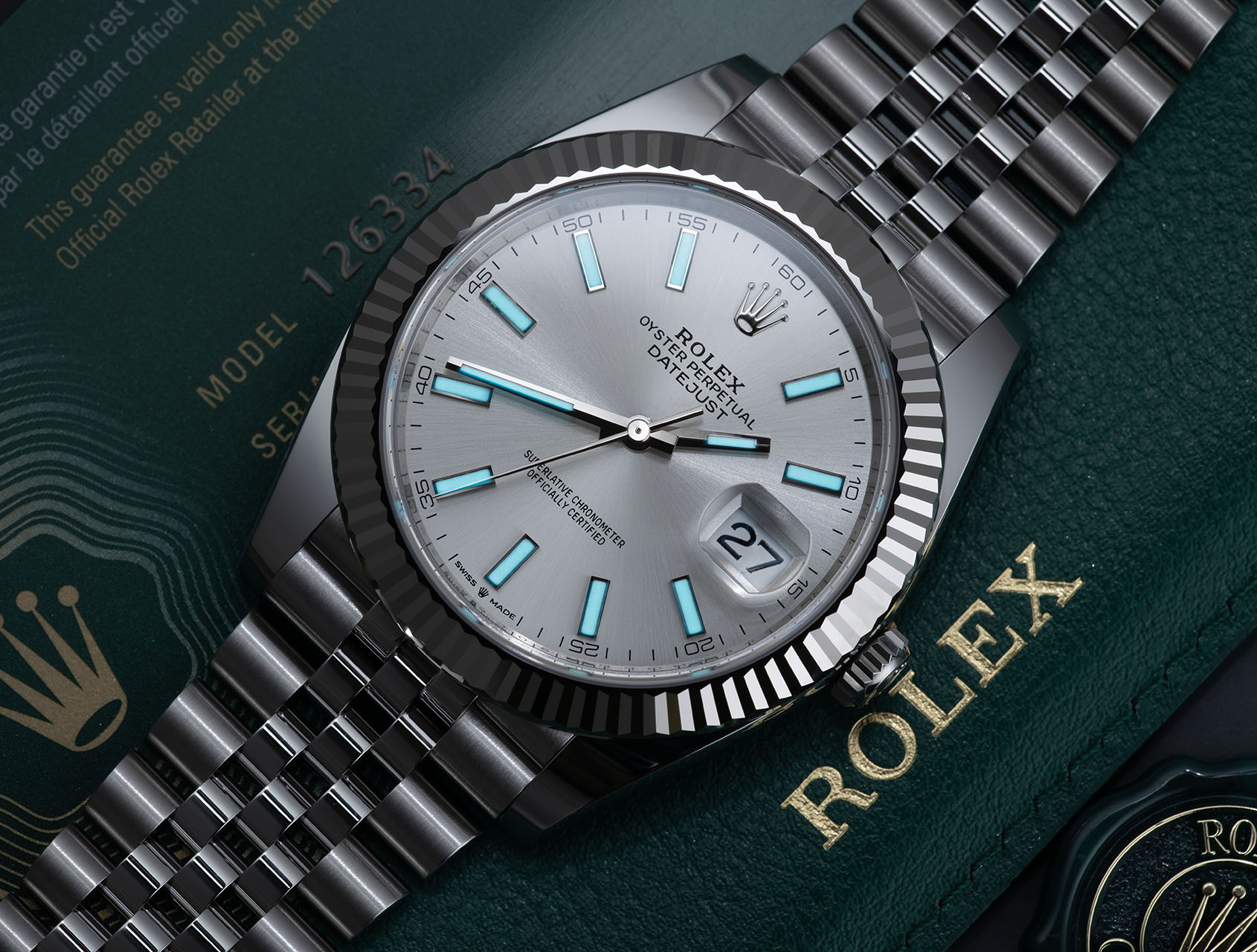
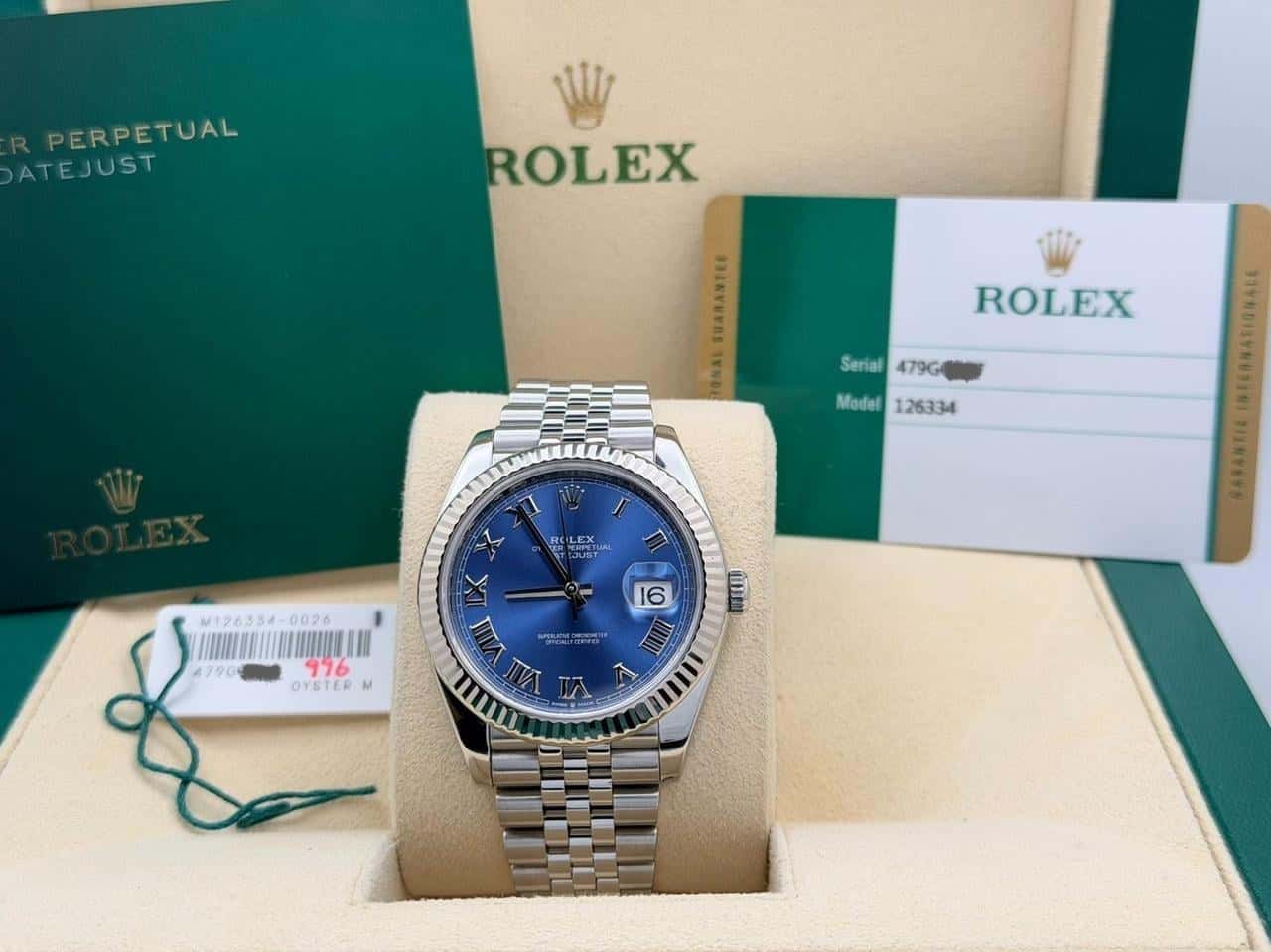
The Datejust 41 Ref. 126334 is fundamentally the more elaborate watch. Its White Rolesor construction combines an Oystersteel case with an 18k white-gold fluted bezel. Beneath the sapphire crystal sits Rolex’s instantaneous date display at 3 o’clock, enlarged by the signature Cyclops lens. Buyers can choose either the five-link Jubilee bracelet or the sportier three-link Oyster bracelet. Rolex equips both with an Oysterclasp and 5mm Easylink extension.
Inside is Calibre 3235, offering approximately 70 hours of power reserve, a Chronergy escapement and Rolex’s Superlative Chronometer specification of -2/+2 seconds per day after casing. Water resistance is 100 meters.
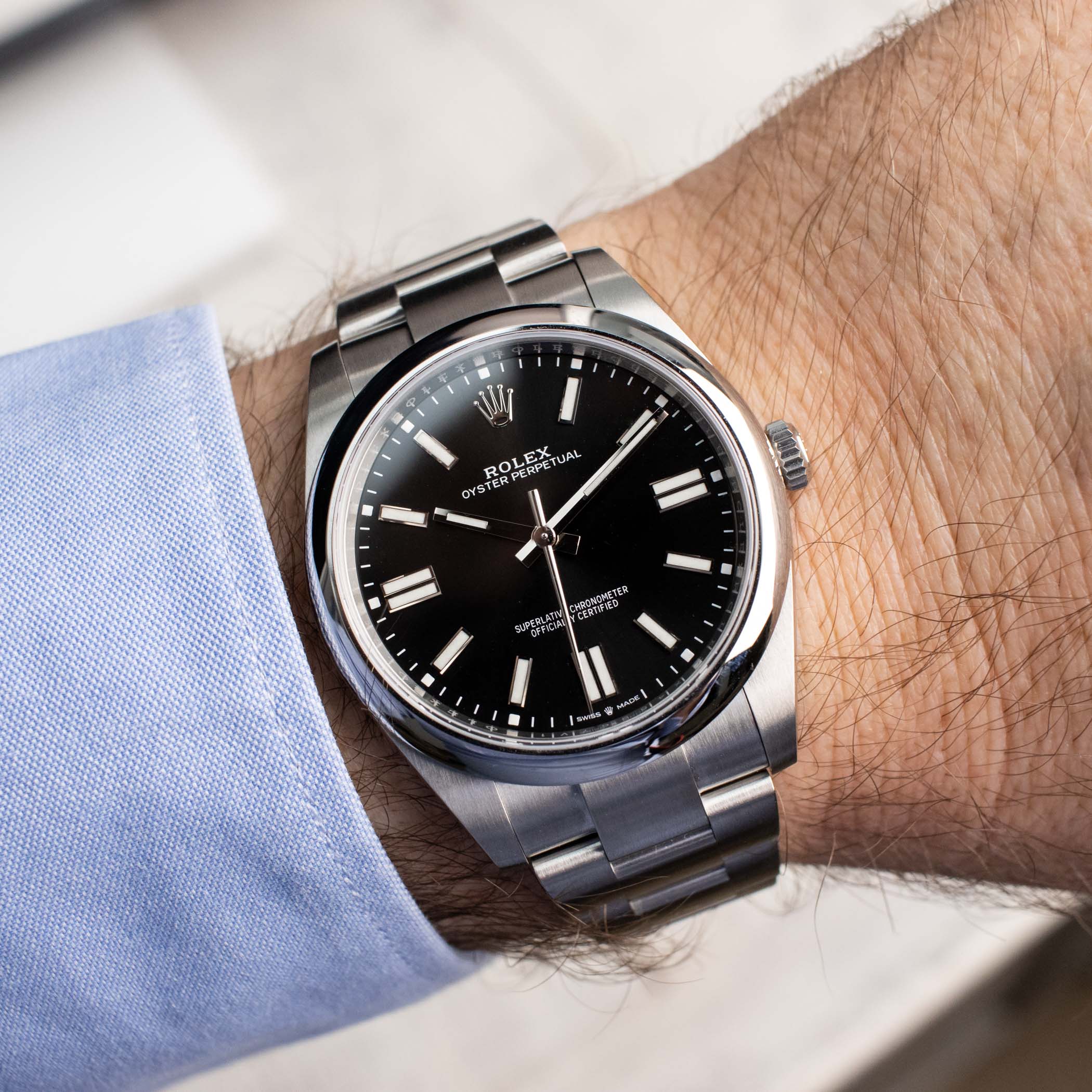
The OP 124300 strips the formula down. You get Oystersteel, a smooth domed steel bezel, no date, no Cyclops and an Oyster bracelet only. Calibre 3230 shares much of the architecture and approximately 70-hour reserve of the 3235 but eliminates the date mechanism. It is also rated to 100 meters.
Mechanically, then, there is little mystery: the Datejust gives you more hardware and more functionality.
The Secondary Market Premium Paradox: Why a Steel OP Can Cost More than a Fluted Datejust
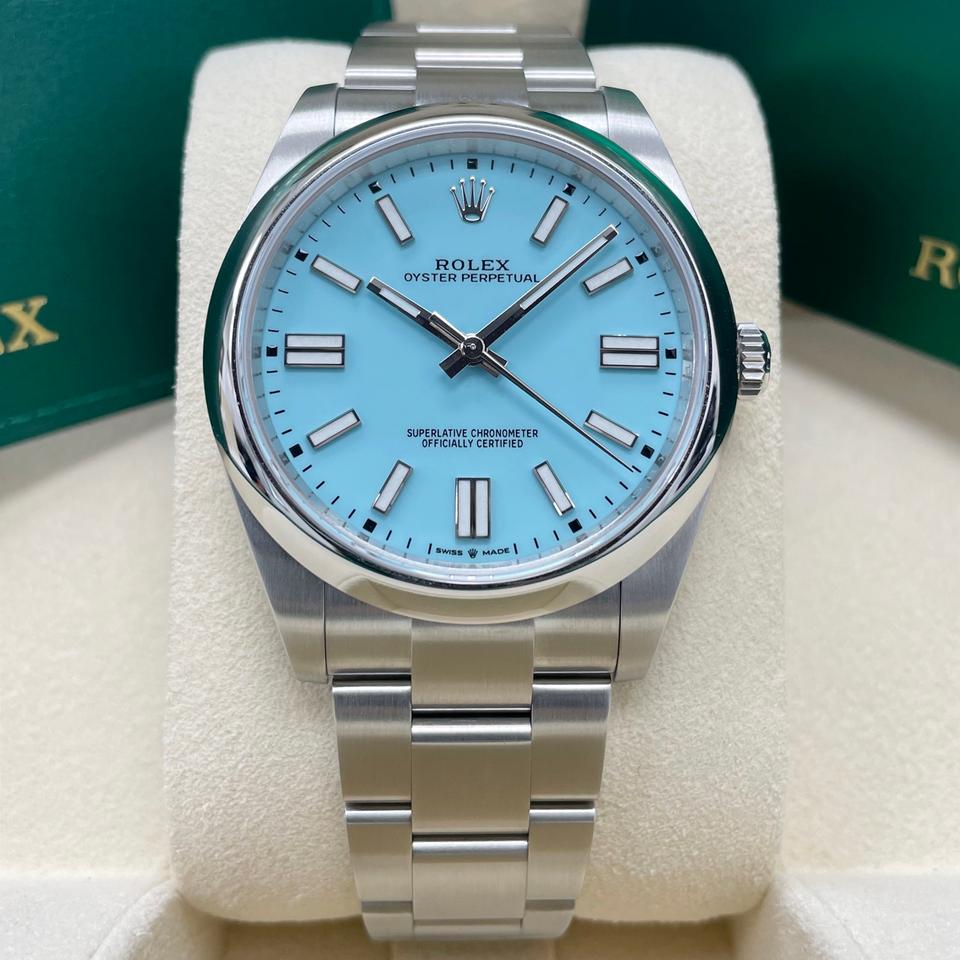
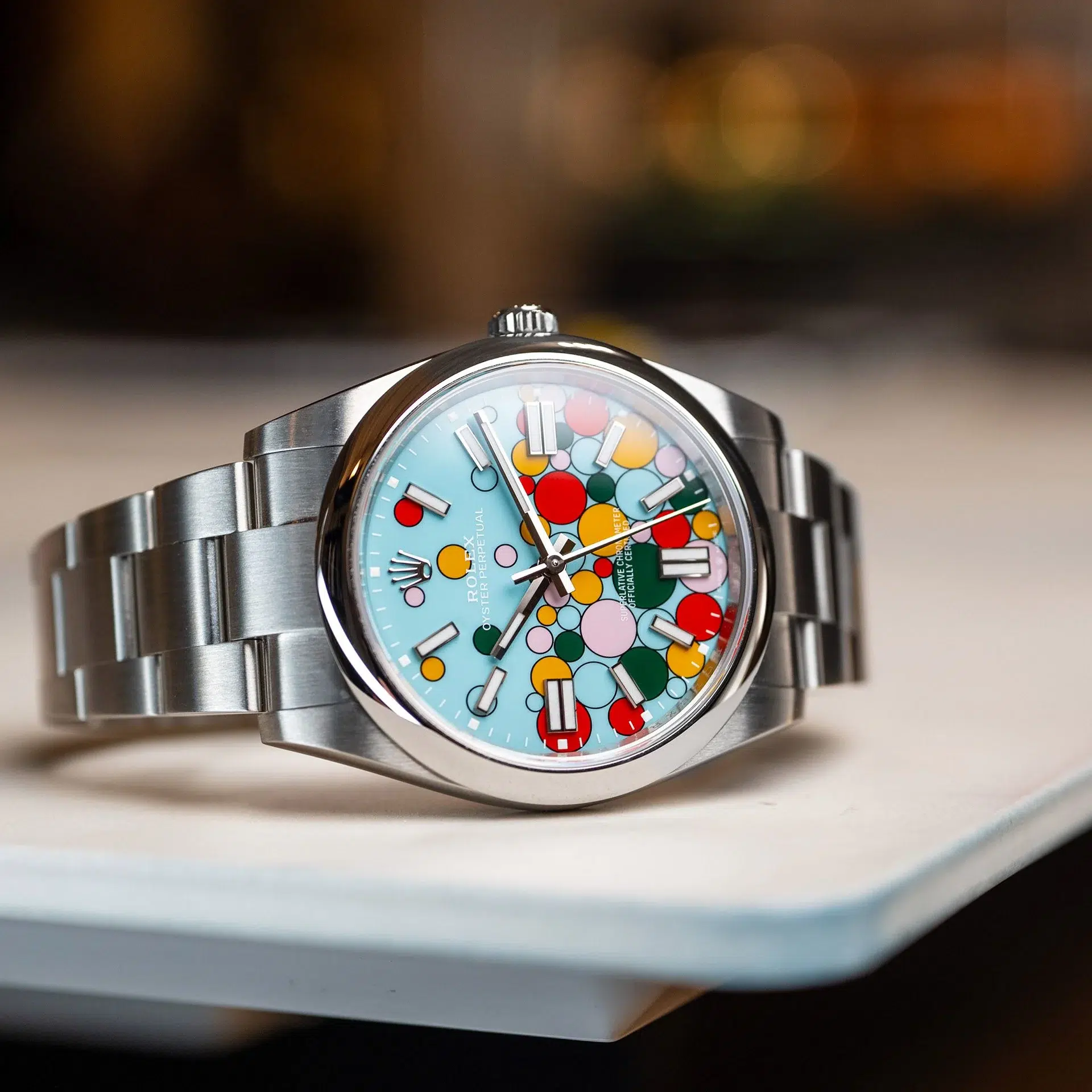
This is where rational specification sheets collide with collector behavior, because apparently a few millimeters of colored lacquer are fully capable of bullying an 18k-gold bezel in the marketplace.
The 124300 had an original U.S. MSRP of approximately $6,400. By September 2026, WatchCharts estimates vary dramatically by dial:
| OP 41 Ref. 124300 Dial | Sept. 2026 Market Estimate | Premium vs. $6,400 MSRP |
|---|---|---|
| Silver | $8,385 | +31% |
| Black | $8,851 | +38% |
| Green | $9,431 | +47% |
| Yellow | $16,379 | +156% |
| Turquoise | $17,983 | +181% |
| Celebration | $20,544 | +221% |
That means the commonly quoted 80–120% OP premium actually understates the 2026 situation for the rarest 41mm dials.
Meanwhile, the Datejust 126334 carries a current retail price of approximately $11,650 on Oyster or $11,850 on Jubilee, depending on configuration. WatchCharts places its September 2026 secondary-market estimate at roughly $14,450, about 22–24% above current retail.
There is another useful correction: the green OP does not currently trade above the typical 126334. At roughly $9,431, it remains substantially below the Datejust’s $14,450 reference-level estimate. The true price inversion occurs primarily with Turquoise, Celebration, Yellow and Coral/Orange variants.
The premium is therefore not payment for horology. It is payment for dial scarcity, discontinuation and collector recognition.
Daily Wearability vs. Investment Longevity: 3-Year Value Retention Comparison
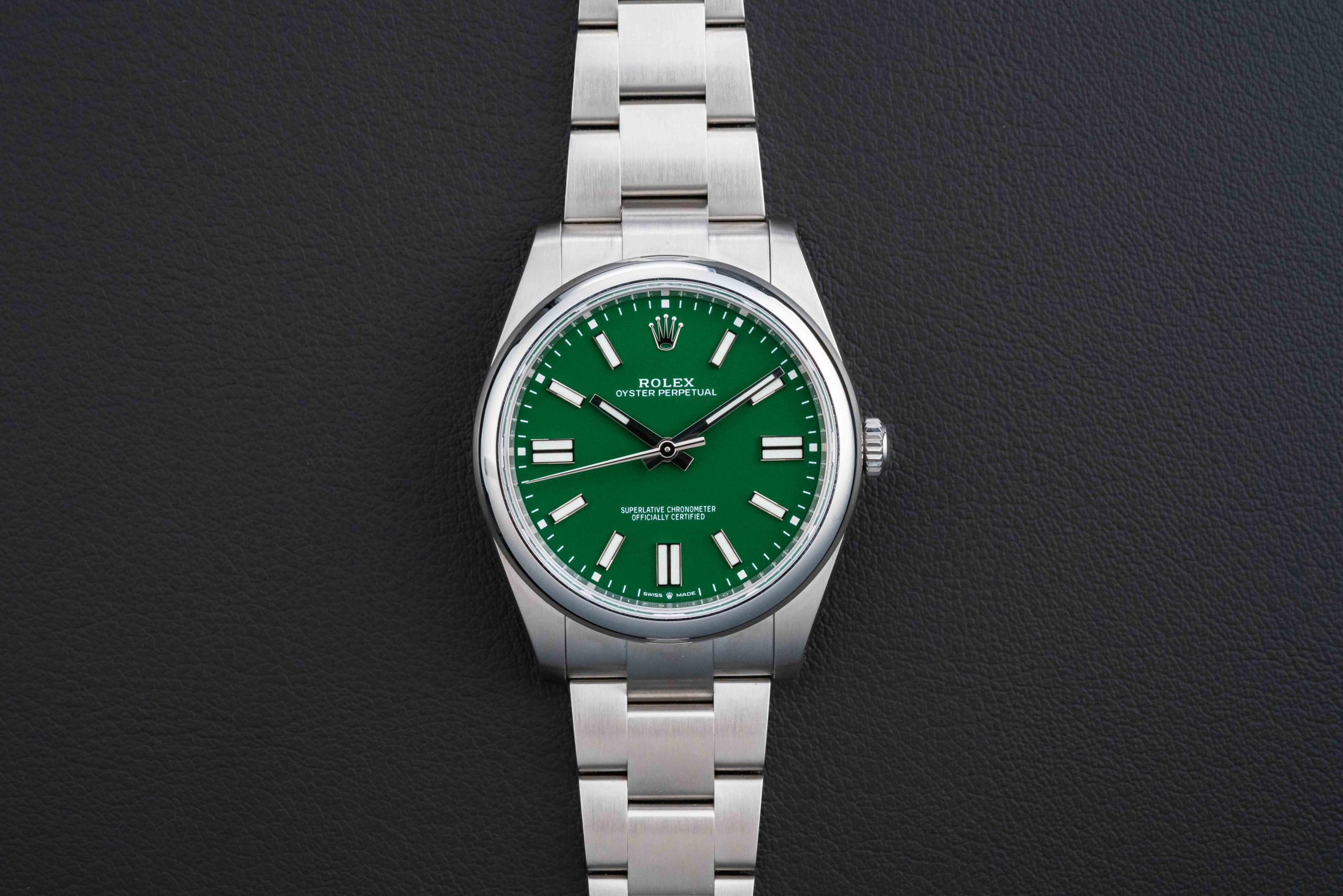
For daily ownership, the OP arguably has the cleaner proposition. No date means no calendar adjustment, the smooth bezel attracts less visual attention, and the Oyster bracelet gives it a restrained sports-watch character. A black, silver, blue or green 124300 can be worn without carrying a five-figure speculative dial premium.
The Datejust is dressier but surprisingly practical. The Cyclops/date combination is genuinely useful, while 100-meter water resistance and the Easylink extension make it perfectly viable as an everyday watch rather than a fragile dress piece.
For value retention, however, the market data favors separating liquidity from upside.
WatchCharts reports approximately 10.3% market volatility, +25% value retention and more than 10,000 one-year sales for the 126334. That is an unusually deep secondary market.
The Turquoise 124300 is a very different asset: WatchCharts reports 45.4% volatility and only 17 one-year sales. Celebration is less volatile at roughly 10.2%, but with only 32 annual recorded sales it remains dramatically thinner than the Datejust market.
So the three-year lesson is not simply “Datejust stable, OP volatile.” Standard OP dials behave relatively normally. The speculative component is concentrated in discontinued colors where scarcity can magnify both upside and pricing uncertainty.
Head-to-Head Comparison Matrix
| Specification | Datejust 41 Ref. 126334 | Oyster Perpetual 41 Ref. 124300 |
|---|---|---|
| Production status in 2026 | Current | Discontinued in 2025 |
| MSRP / last MSRP | $11,650 Oyster / $11,850 Jubilee | Approx. $6,400 historical |
| Sept. 2026 secondary baseline | Approx. $14,450 | Approx. $9,129 overall |
| Rare-dial secondary values | Configuration dependent | Turquoise ~$17,983; Celebration ~$20,544 |
| Movement | Calibre 3235 | Calibre 3230 |
| Functions | Time + instantaneous date | Time only |
| Power reserve | Approx. 70 hours | Approx. 70 hours |
| Water resistance | 100 meters | 100 meters |
| Bezel | 18k white-gold fluted | Oystersteel domed |
| Bracelet | Jubilee or Oyster | Oyster |
| Clasp | Oysterclasp + 5mm Easylink | Oysterclasp + 5mm Easylink |
Rolex now sells the successor OP41 Ref. 134300 for $7,050, useful context when judging how much of a 124300’s price represents the discontinued dial rather than the underlying watch.
5 Frequently Asked Questions for First-Time Rolex Buyers
1. Is the Datejust 41 technically better than the Oyster Perpetual 41?
It offers more: a date complication, Cyclops lens, white-gold bezel and additional bracelet choice. Both movements, however, deliver roughly 70 hours of reserve and Rolex Superlative Chronometer performance.
2. Why is the Celebration OP worth more than many Datejusts?
Scarcity. The 124300 Celebration appeared late in the reference’s production life and was discontinued with the 124300 generation in 2025.
3. Is the Green OP 41 still heavily overpriced?
Its estimated $9,431 market value remains above its historical $6,400 MSRP, but it is nowhere near the pricing of Turquoise or Celebration.
4. Which is easier to resell?
The 126334 has extraordinary market depth, with more than 10,000 recorded one-year sales in WatchCharts’ dataset. Rare OPs can sell quickly, but the buyer pool and transaction count are much smaller.
5. Which offers better value per dollar?
At roughly $14,450 secondary-market value, the Datejust 126334 is the stronger horological-value proposition. Paying $18,000–$20,500 for a Turquoise or Celebration OP is primarily a collector-scarcity decision, not a purchase of additional mechanical capability.
Shop In-Stock Rolex Datejust and Oyster Perpetual Models at Luxury Watches USA


Luxury Watches USA currently lists a broad selection of Datejust 126334 configurations as well as discontinued Oyster Perpetual 124300 variants, allowing buyers to compare ordinary dials against genuinely scarce configurations rather than treating every OP as if it carries the same premium.
Shop Rolex Datejust Watches at Luxury Watches USA
Shop Rolex Oyster Perpetual 124300 Models
For the buyer who wants the most Rolex engineering, functionality and precious-metal detailing per dollar, the Datejust 41 Ref. 126334 makes the stronger value case. For the collector specifically pursuing discontinued modern Rolex dial culture, Turquoise and Celebration OPs are different propositions entirely: their premiums are scarcity premiums, and in 2026 the market is paying handsomely for scarcity.
 Free Shipping for all orders