

















Blog, Patek Philippe
Buying a Patek Philippe Nautilus: Authorized Dealer vs Secondary Market (2026 Guide)
Aug
Buying a Patek Philippe Nautilus in 2026 comes down to one trade-off: time vs money. Through an authorized dealer, steel references retail at $32,000–$55,000 — but the waiting list runs 5–8 years, and getting on the list requires establishing a purchase history with the dealer first. Through the secondary market, you can acquire the same watch within days for $110,000–$300,000 depending on reference and condition. Both paths are legitimate; neither is simple. This guide covers what each route actually requires, the real risks, and the current investment data on both sides.

Browse authenticated Patek Philippe Nautilus references — current inventory available now.
Why the Nautilus Commands These Prices
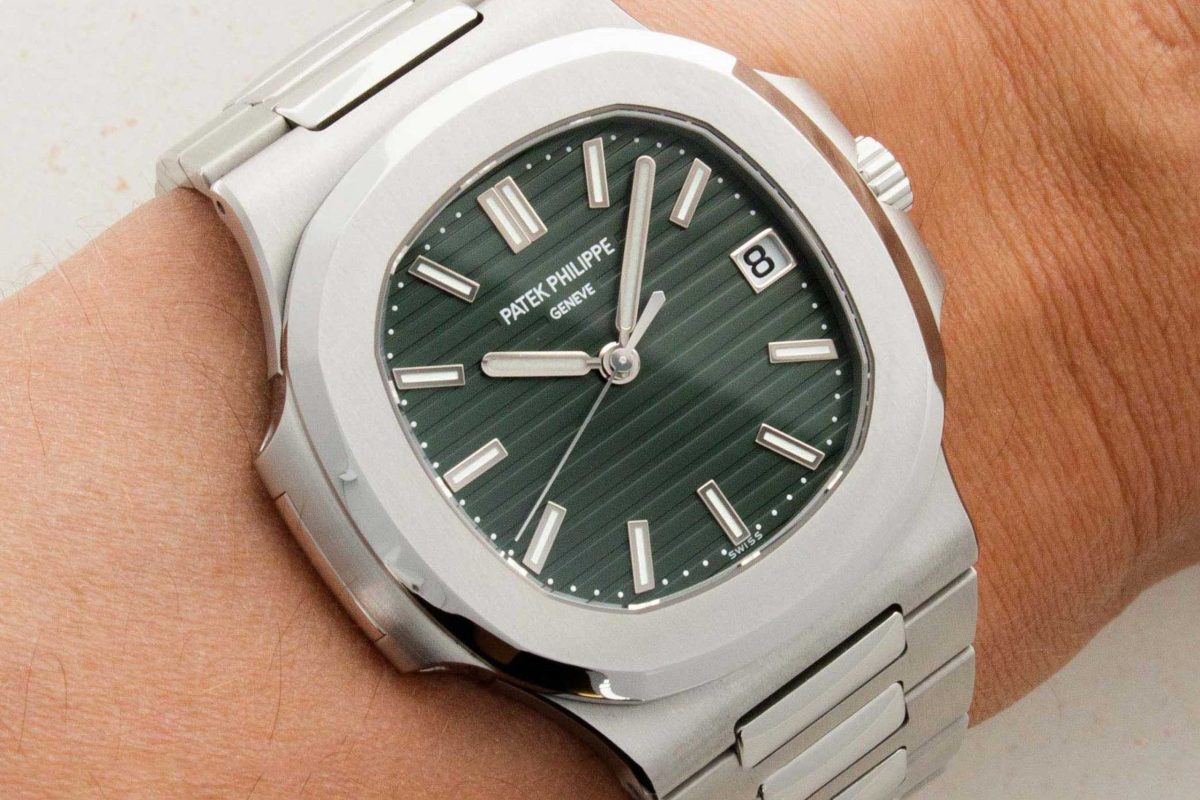
The Nautilus was designed by Gérald Genta in 1976 — sketched in five minutes at a restaurant, allegedly inspired by a ship’s porthole. Patek Philippe had commissioned Genta to produce a luxury sports watch to compete with his earlier design for the Audemars Piguet Royal Oak. The result: an octagonal bezel with exposed screws, a horizontally embossed dial, and integrated bracelet — steel construction at a price that challenged every conventional assumption about what steel watches could cost. That premise became the foundation for one of watchmaking’s most persistent secondary market premiums.
Patek Philippe produces approximately 60,000 watches annually across all collections, with the Nautilus representing a small fraction. Manufacturing timelines run nine months for simpler models and over two years for complications. The discontinuation of the 5711/1A in 2021 — announced by Patek president Thierry Stern — triggered a price surge that pushed secondary market values to unprecedented levels. A special Tiffany Blue edition from the same year sold for $6.5 million at auction. Notable owners including Jay-Z, Brad Pitt, and John Mayer have sustained the cultural pressure on demand.
The Authorized Dealer Path
Purchasing a Nautilus from an authorized dealer means paying retail — but the actual challenge is access, not price. Most first-time buyers cannot get on the waiting list regardless of financial capacity. Dealers evaluate customers based on purchase history with the brand, demonstrated loyalty, and spending consistency. Many require annual purchases in the $50,000–$100,000 range across other Patek Philippe references before a Nautilus allocation becomes realistic. Over several years, some customers invest $200,000–$500,000 in the relationship before receiving consideration.

| Factor | Authorized Dealer | Secondary Market |
|---|---|---|
| Price | $32,000–$55,000 retail | $110,000–$300,000 |
| Availability | 5–8 year waiting list | Immediate |
| Authentication risk | None | Significant — fakes exist |
| Warranty | Full manufacturer coverage | Limited or none |
| Documentation | Complete (box, papers, cert) | Variable |
| Investment cost basis | Lower — higher return potential | Higher — market risk on entry |
The Secondary Market Path
The secondary market’s defining advantage is immediacy. Auction houses like Christie’s, Sotheby’s, and Phillips provide the strongest authenticity guarantees — but competitive bidding often pushes prices above the mid-market. The most sought-after discontinued 5711/1A models peaked at ~$131,000 and have since corrected to approximately $89,000 — a drop of 11.4% from peak levels, per secondary market data. This creates real opportunity for patient buyers who avoided the 2021–2022 bubble pricing. Current secondary market range across all references: $110,000–$300,000 depending on reference, condition, and documentation completeness.

The Nautilus’s popularity makes it a prime counterfeit target — sophisticated fakes require expert authentication to identify. Key checks: movement finishing quality, dial print precision, case back engraving, serial number placement, bracelet construction, and accompanying documentation. Professional authentication typically costs $200–$500 and is non-negotiable for any private secondary market transaction. “Full set” examples — original box, papers, and certificate — command 10–20% premiums over incomplete pieces and should be prioritized when available.

Looking for a Patek Philippe 5711/1A or current Nautilus references? View authenticated inventory.
Investment Outlook
The investment case for both routes depends on cost basis. A Nautilus bought at $35,000 retail versus $90,000 on the secondary market represents fundamentally different return math — even if the resale price is identical. Authorized dealer purchases also guarantee complete documentation, which carries a measurable 10–20% resale premium. The discontinued 5711/1A maintains particular collector appeal given its iconic status, but the 2021–2022 bubble has partially deflated. Secondary market participants entering now — after the 11.4% correction — are in a stronger position than those who bought at peak. As noted by the New York Times, realistic pricing expectations have replaced the speculative frenzy of 2021.
Want expert guidance on a Patek Philippe acquisition? Schedule a virtual consultation.
FAQ
The authorized dealer waiting list for most Nautilus references runs 5–8 years — and that assumes you’re already on the list. Getting listed requires establishing a purchase history with a specific dealer, typically spending $50,000–$100,000 annually across other Patek Philippe models. Some serious collectors invest $200,000–$500,000 over several years before receiving a Nautilus allocation.
Secondary market pricing in 2026 ranges from $110,000–$300,000 depending on reference and condition. The 5711/1A peaked at ~$131,000 and has corrected to approximately $89,000 following the post-2022 market cool-off. Full set examples (box, papers, certificate) command a 10–20% premium over incomplete pieces.
Yes — if you use reputable sources and insist on professional authentication. Established auction houses (Christie’s, Sotheby’s, Phillips) carry the strongest guarantees. For private transactions, budget $200–$500 for expert authentication. Key authentication points: movement finishing, dial printing, case back engraving, and complete original documentation.
The discontinued 5711/1A (steel, blue dial) maintains the strongest collector demand due to its iconic status and production cessation. However, the cost basis at secondary market prices creates a high bar for future appreciation. Buyers with authorized dealer access at retail price enjoy the most favorable investment dynamics — lower entry cost and full documentation guarantee better resale margins.
 Free Shipping for all orders