


















Sep
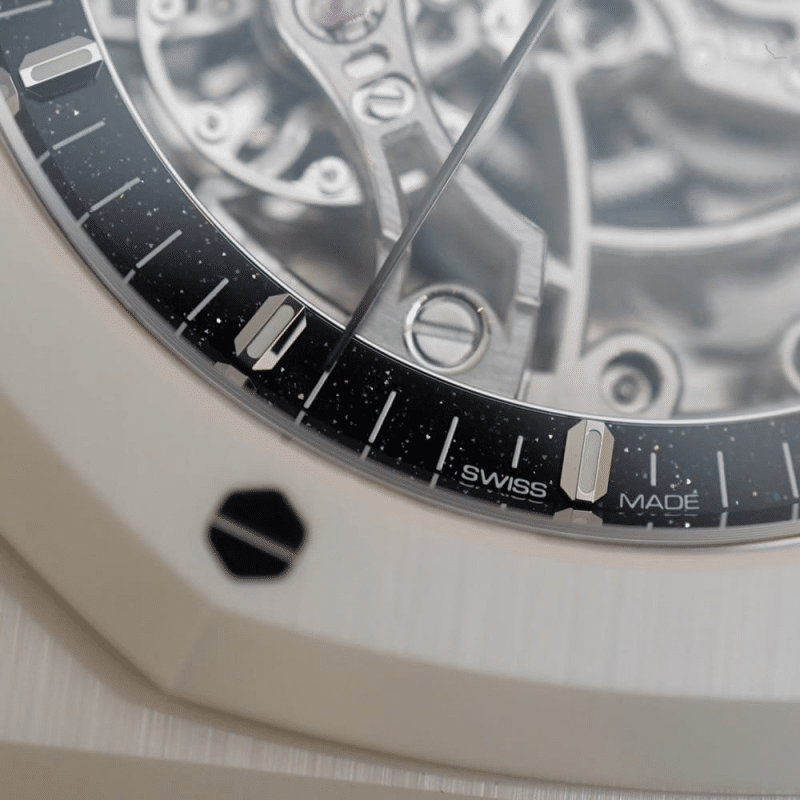
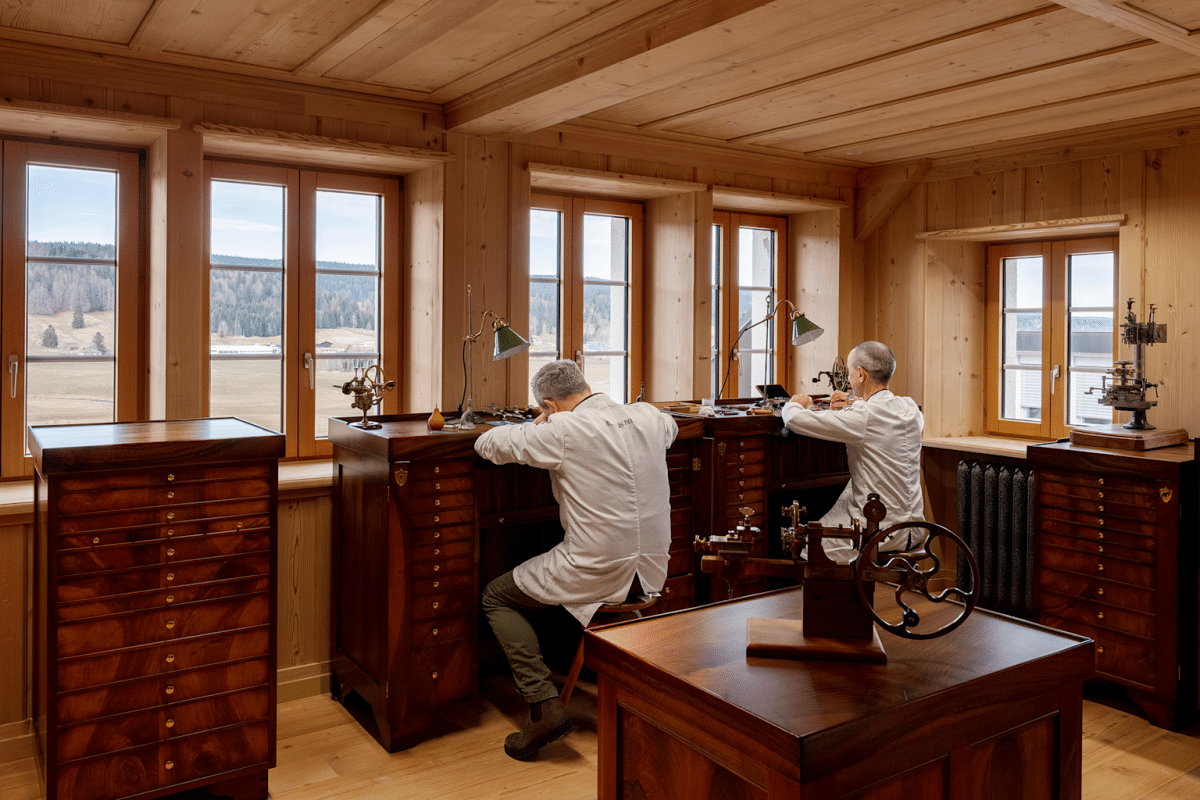
Audemars Piguet ceramic watches combine cutting-edge materials with the Swiss craftsmanship that has defined the brand for 150 years. The ceramic used in AP watches is zirconium oxide — sintered at ~1,400°C, approximately five times harder than steel, lighter, hypoallergenic, and fade-proof. Creating a brushed and polished ceramic bracelet for a Royal Oak requires approximately 30 hours of work, versus 6 hours for a traditional steel bracelet. The result: a Royal Oak Offshore-grade durability in a material that is virtually scratch-resistant under normal wear.
Browse our authenticated Audemars Piguet ceramic inventory — Royal Oak and Offshore models available.
Audemars Piguet Heritage
Founded in 1875 by Jules-Louis Audemars and Edward-Auguste Piguet in Le Brassus, Vallée de Joux, AP is one of the “Holy Trinity” of Swiss watchmaking alongside Patek Philippe and Vacheron Constantin — as detailed in Fratello’s complete AP brand history. The 1972 Royal Oak, designed by Gérald Genta, was the first high-end stainless steel sports watch — its octagonal bezel, Tapisserie dial, and integrated bracelet created an entirely new luxury category, and paved the way for ceramic innovations that define AP’s contemporary collection.
Why AP Ceramic Is Different
- Material: Zirconium oxide, sintered at ~1,400°C — ~5× harder than steel
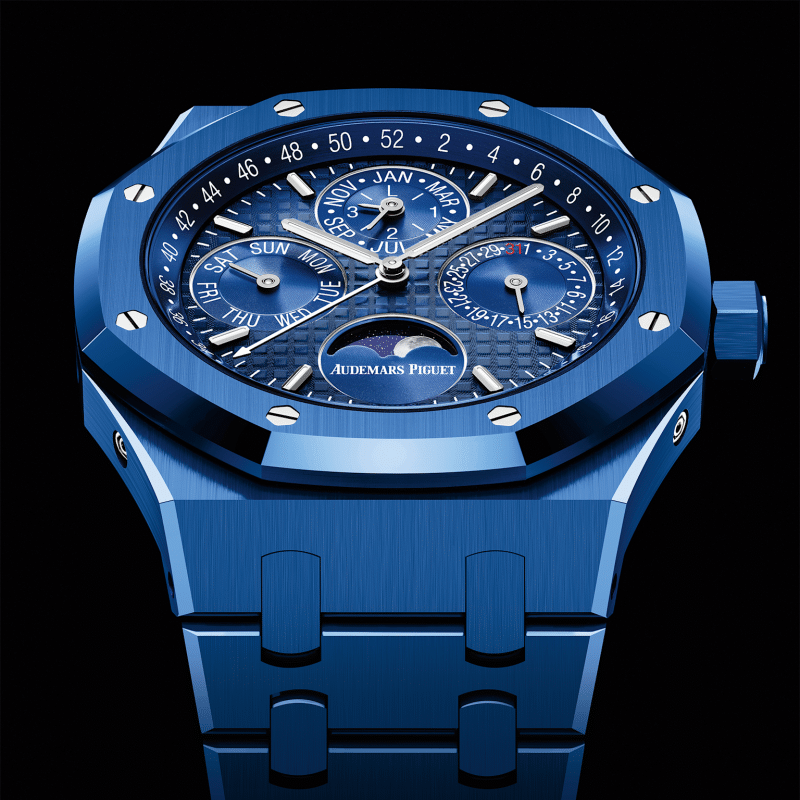
- Colors available: Black, white, electric blue, green, brown, “Bleu Nuit, Nuage 50” (2025)
- Finishing: Alternating polished and satin-brushed surfaces — same high-end process as precious metals despite ceramic’s hardness
- Bracelet production time: ~30 hours vs. 6 hours for steel
- Daily wear advantages: Virtually scratch-resistant, fade-proof, hypoallergenic, lighter than metal equivalents
The 2025 “Bleu Nuit, Nuage 50” ceramic — inspired by the original 1972 Royal Oak dial color — required years of development to ensure consistent color reproduction across all watch components. Details on the new shade are documented on the official AP dark blue ceramic page.
AP Ceramic Models: Specs and Prices
Royal Oak Ceramic (41mm)
Full ceramic construction — case, bezel, and bracelet. Power reserve up to 70 hours, water resistance 50m, sapphire exhibition caseback. Key references:
- Royal Oak Selfwinding Chronograph (Ref. 26240CE): MSRP $82,200, secondary market $110,900 (+35%)
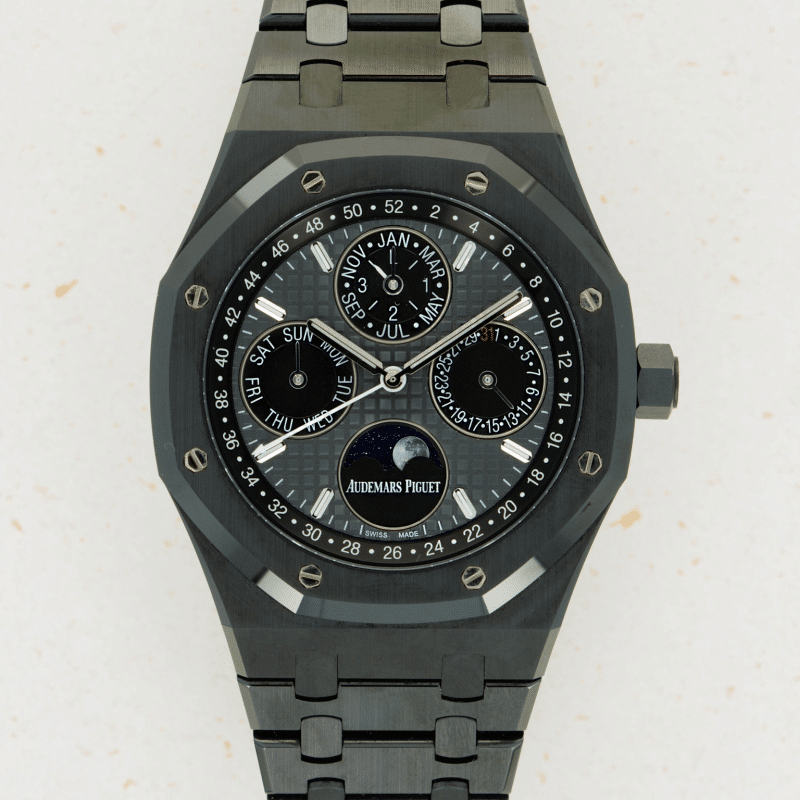
- Royal Oak Perpetual Calendar (Ref. 26579CE): Ceramic case and bracelet with full perpetual calendar complication
- Royal Oak Double Balance Wheel Openworked: Patented double balance wheel visible through openworked dial
Royal Oak Offshore Ceramic (42–43mm)
Larger, sportier aesthetic. Integrated flyback chronograph, ceramic bracelet with seamless link integration, water resistance to 100m. Per WorldTempus coverage of new AP ceramic shades, the latest 2025 releases include “Bleu Nuit, Nuage 50” models with white gold hands and hour markers on monochromatic blue ceramic.
- Royal Oak Offshore Diver White Ceramic (Ref. 15707CB): One of the few white ceramic dive watches in haute horlogerie
- Royal Oak Concept Ceramic: Avant-garde designs in ceramic construction
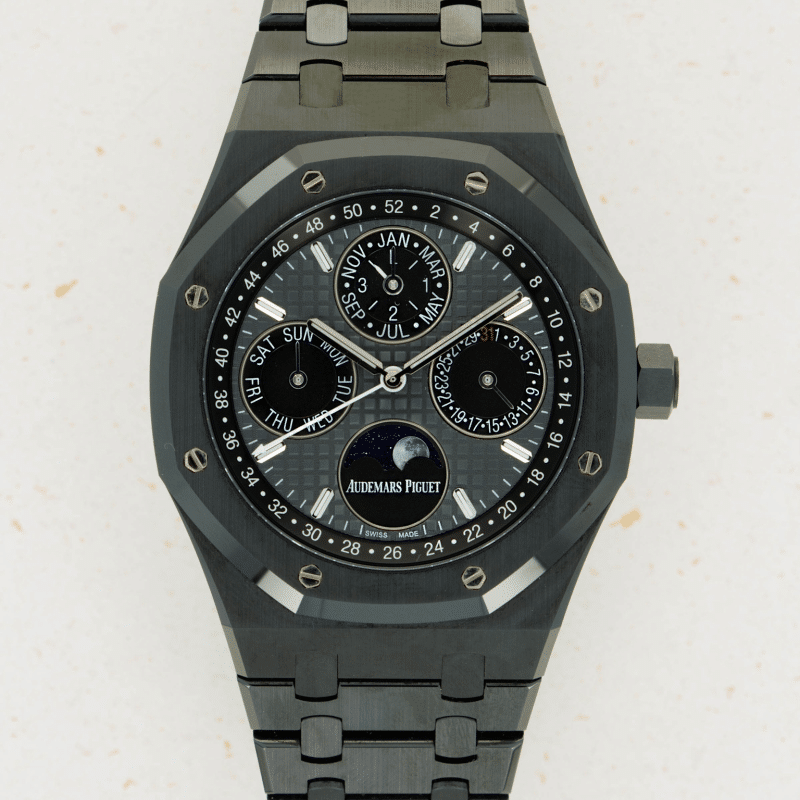
Selling an AP ceramic? Get a competitive same-day offer from our specialists.
Investment Value and Market Performance
| Model | MSRP | Secondary Market | Premium |
|---|---|---|---|
| Royal Oak Ceramic Chronograph (26240CE) | $82,200 | $110,900 | +35% |
| Royal Oak Offshore Ceramic 42mm | $91,300 | $91,100 | Stable |
| Royal Oak Offshore Ceramic 43mm | $63,900 | $52,250 | -18% |
AP produces only ~50,000 watches annually across their entire range — ceramic models represent a small fraction of that. While the luxury watch market experienced an 8% decline in 2024 with some models losing over 20% from peak values, ceramic Royal Oak models maintained relatively stable pricing, reflecting the material’s unique positioning. Investment priorities: original box and papers, unpolished ceramic, complete service history. The pre-owned market offers opportunities to acquire discontinued ceramic references with proven appreciation potential.

Caring for Your AP Ceramic Watch
Cleaning
- Remove the watch and secure the crown
- Warm water with a drop of mild dish soap — no harsh chemicals or abrasives
- Gently brush with a soft toothbrush, paying attention to bracelet links and bezel details
- Rinse thoroughly, then dry with a soft microfiber cloth (not paper towels)
Key Care Notes
- Thermal shock: Avoid rapid temperature changes (e.g. hot sauna to cold water) — ceramic is hard but can be brittle under extreme thermal stress
- Impacts: Ceramic resists scratches but can chip or crack under severe mechanical impact — avoid dropping
- Professional service: Every 3–5 years at an authorized AP center — includes movement cleaning, ceramic refinishing, water resistance testing, and accuracy regulation
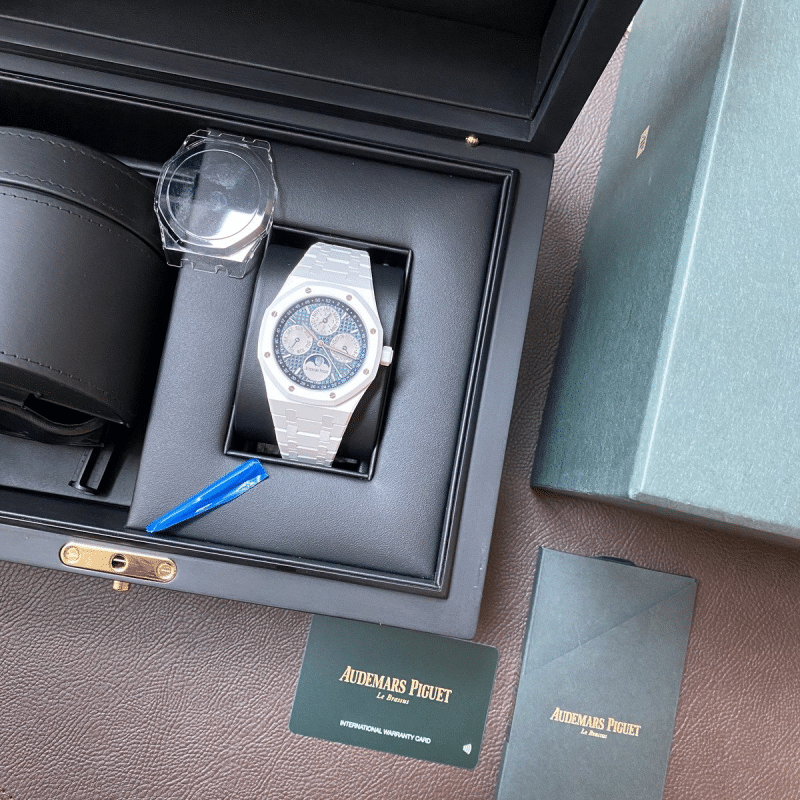
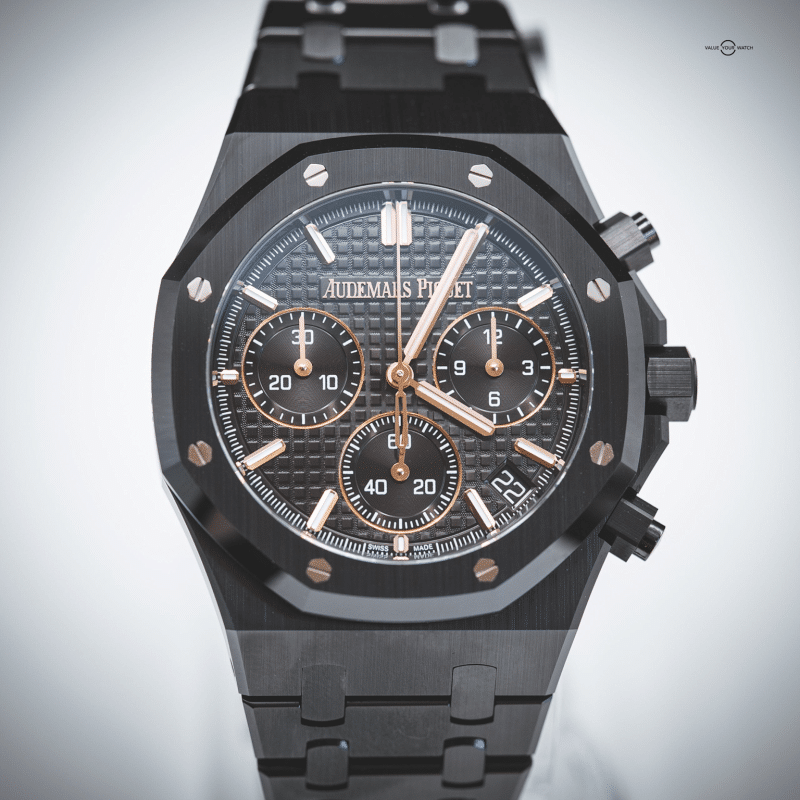
Questions about a specific AP ceramic reference? Book a private consultation with our specialists.
FAQ
AP uses zirconium oxide (ZrO₂), a high-tech ceramic sintered at approximately 1,400°C. The resulting material is approximately five times harder than steel, significantly lighter, hypoallergenic, and fade-proof. The same alternating polished and satin-brushed finishing applied to precious metal components is applied to ceramic — a technically demanding process given how hard and brittle the raw material is before finishing.
Approximately 30 hours — compared to 6 hours for a traditional steel bracelet. This includes machining the sintered ceramic, achieving the alternating polished and brushed surfaces on the octagonal bezel and bracelet links, and hand-finishing by AP craftsmen. This manufacturing complexity is a primary reason for ceramic models’ premium pricing over steel equivalents.
The Royal Oak Selfwinding Chronograph in black ceramic (Ref. 26240CE) retails at $82,200 with a secondary market value of approximately $110,900 (+35% premium). The Royal Oak Offshore Ceramic 42mm retails at $91,300 with stable secondary pricing. Perpetual calendar ceramic models exceed $400,000. Pre-owned ceramic examples in good condition with original box and papers trade at meaningful premiums over comparable steel models.
Zirconium oxide ceramic is virtually scratch-resistant under normal daily wear — it will not show the micro-scratches that accumulate on steel bracelets. However, ceramic is brittle: it can chip or crack under severe mechanical impact (e.g., dropping on a hard surface) or thermal shock (rapid hot-to-cold temperature changes). AP recommends avoiding extreme temperature swings and severe impacts. Ceramic cannot be re-polished the way steel can, so chips are permanent unless the component is replaced.
 Free Shipping for all orders