


















Aug
The most common first Rolex is the Oyster Perpetual or the Datejust. Both are right for different buyers. The Explorer II sits slightly higher in price but adds GMT functionality for travelers. This guide covers what each model actually is, who it suits, and what to expect on both the retail and pre-owned market.

What “Entry-Level Rolex” Actually Means
The term doesn’t mean a lesser watch. It means a model focused on timekeeping and case quality without precious metal cases, diamond dials, or complications beyond a date. The movements, the case finishing, the bracelet tolerances — all identical to watches costing three or four times more. What you’re paying less for is complication and material cost, not manufacturing quality.
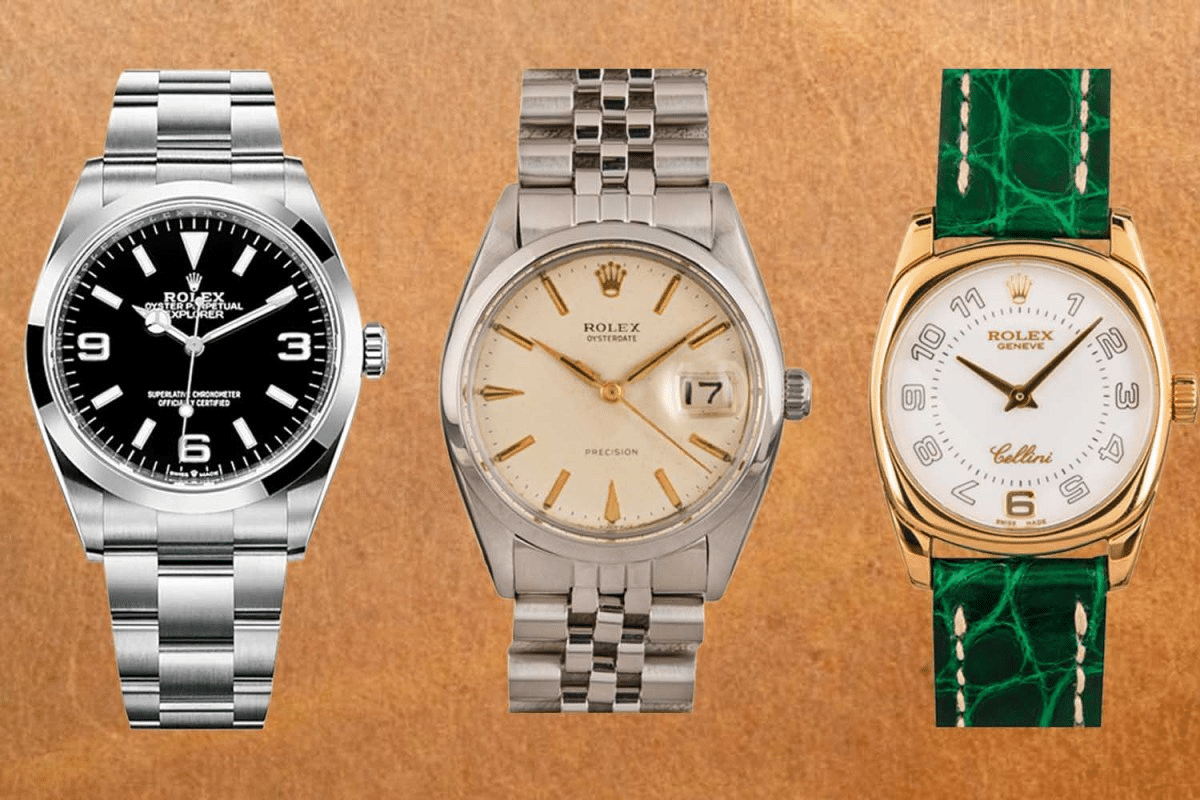
Oyster Perpetual: The Cleanest Starting Point
The Oyster Perpetual is time-only — no date, no complication, clean symmetrical dial. It runs Caliber 3230 (on the 36mm and 41mm), which is the same movement architecture as the Caliber 3235 in the Datejust, minus the date module. The power reserve is 70 hours. Water resistance is 100 meters. The case is 904L Oystersteel.
Sizes and retail pricing: 28mm from $5,500 (Caliber 2232) · 36mm from $6,400 (Caliber 3230) · 41mm from $6,650 (Caliber 3230). All three come on the Oyster bracelet. The colorful dials — Tiffany blue, pink, turquoise, green — have created their own premium secondary market. The Tiffany turquoise 36mm was trading at 2–3× retail at peak demand. Standard white, black, and silver dials trade at modest premiums over retail.
The Oyster Perpetual suits buyers who want a clean, versatile watch that works in every context without drawing attention to itself. It’s the most legible Rolex in the lineup — no bezel markings, no date window, just indices and hands. For first-time buyers who don’t yet know what complications they want, it’s a good starting point precisely because it doesn’t commit you to an aesthetic.
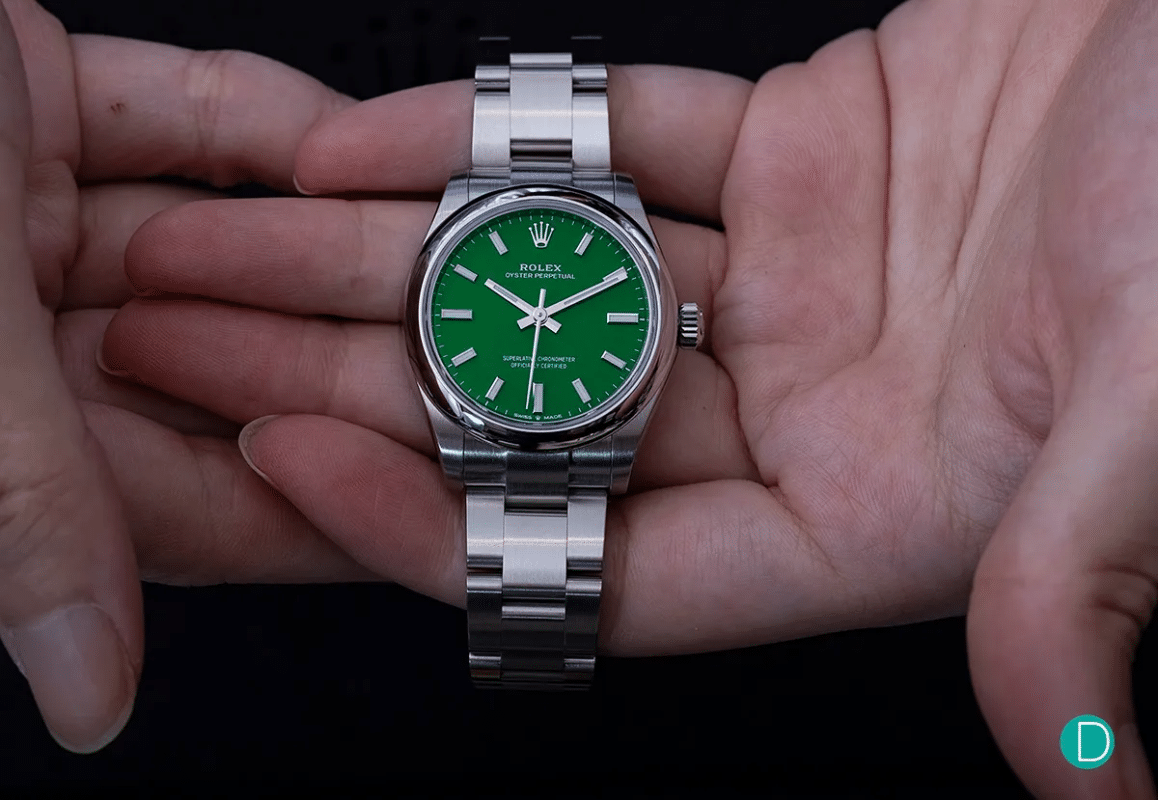
Browse current Oyster Perpetual inventory — available sizes and dial options.
Datejust: The Classic Choice With Date
The Datejust adds a date window, the Cyclops magnifying lens, and a choice between the Jubilee and Oyster bracelet. It’s been in continuous production since 1945 — longer than any other Rolex sport or dress model. The Caliber 3235 inside the 36mm and 41mm Datejust is among the most capable movements Rolex makes: 70-hour power reserve, -2/+2 seconds daily accuracy, Chronergy escapement.
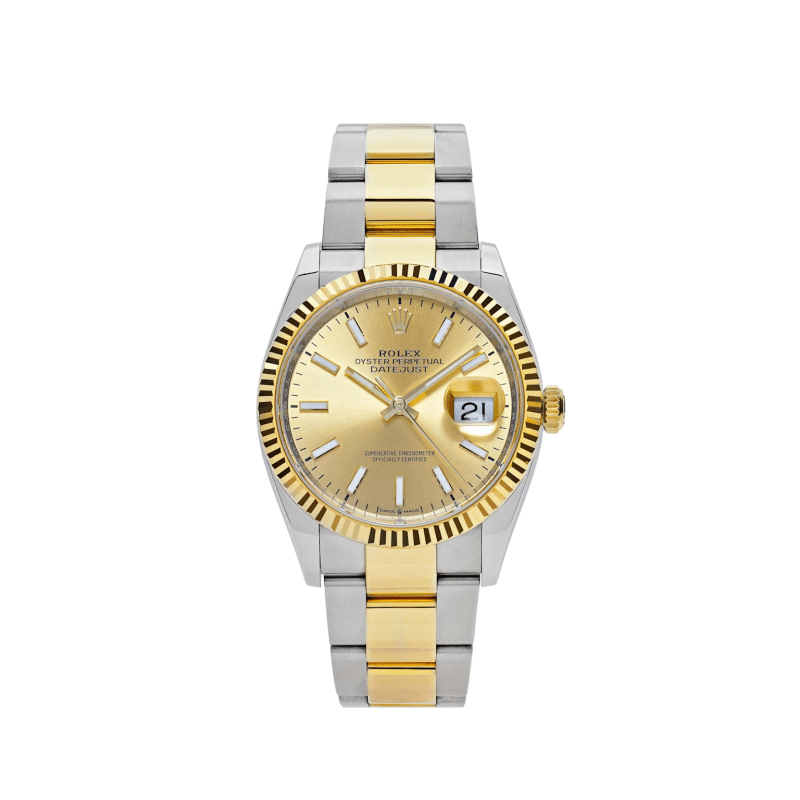
Retail pricing: steel 36mm from $7,750 · steel 41mm from $8,350 · two-tone from $13,550+ · full gold from $34,850+. The Datejust is Rolex’s most available model on the secondary market, which means significant pre-owned pricing diversity. Steel 36mm in good pre-owned condition runs $5,500–$8,000 depending on reference, dial, and condition. Steel 41mm pre-owned from $7,000–$12,000.
The Datejust suits buyers who want the date complication, a more formal aesthetic, or the Jubilee bracelet specifically. The Jubilee — the five-link design created for the original 1945 Datejust — remains one of the most comfortable watch bracelets made. If you’re going to wear the watch in business or formal settings most of the time, the Datejust in a steel or two-tone configuration on Jubilee is the more appropriate choice over the Oyster Perpetual.
Explorer II: GMT Functionality at Entry Price
The Explorer II sits at $10,200–$12,500 retail for current references. What it adds over the OP and Datejust is a GMT complication — an independently adjustable hour hand and a 24-hour fixed bezel that tracks a second time zone. The orange GMT hand and white dial are the signature look. Caliber 3285 with 70-hour power reserve and the same accuracy specs as the Datejust’s 3235.
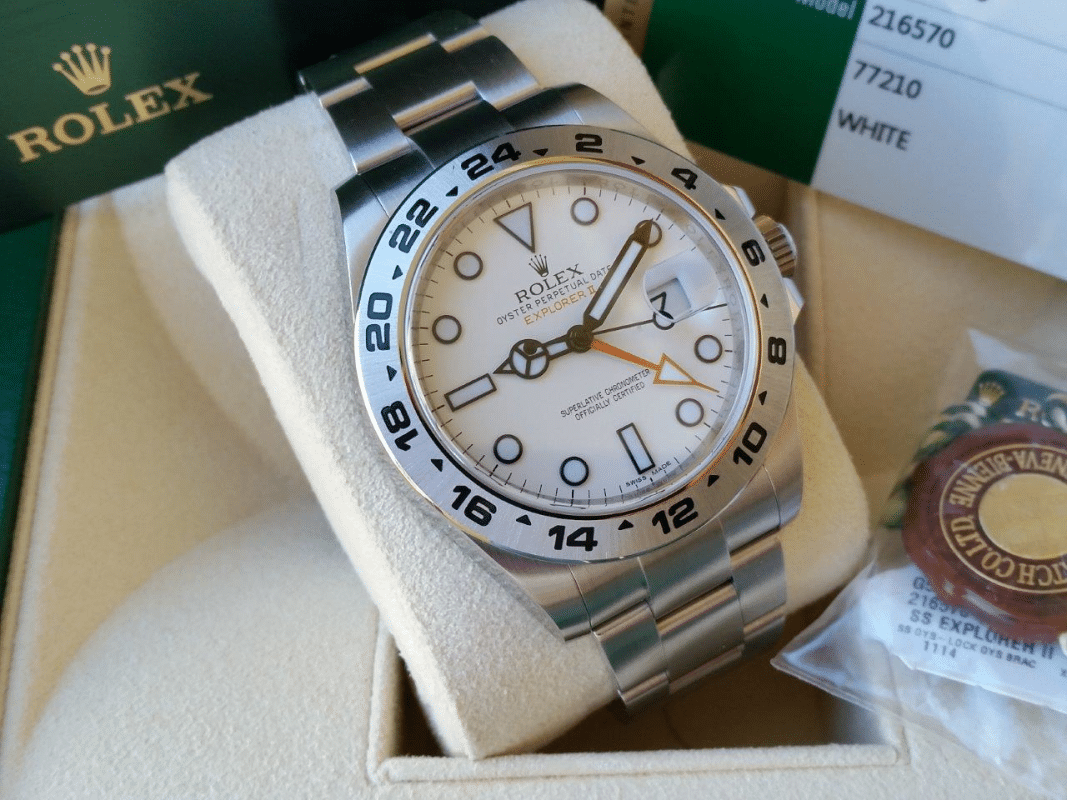
The Explorer II is the right choice if you travel regularly and want a GMT function that’s simpler to operate than the GMT-Master II (no rotating bezel, just a fixed 24-hour scale). The 42mm case is larger than the OP or Datejust — it suits wrists 7 inches and above. Vintage references, particularly the original 1655 with its orange hand and distinctive case shape, are collectible at $20,000+.
Pre-Owned Entry-Level: What to Budget Under $10,000
Oyster Perpetual 36mm (ref. 126000) — pre-owned from $5,500–$7,500. White, black, and silver dials at the lower end; colorful dials (yellow, green, pink) at the higher end, with Tiffany blue commanding its own premium.
Datejust 36mm (ref. 126200 or 126234) — pre-owned from $6,000–$8,500 for steel. Fluted bezel with Jubilee in steel runs higher.
Vintage Datejust 34mm (refs. 1601, 16014) — from $4,500–$7,000. Manually wound or early automatic. Condition and dial variation drive pricing significantly.
Air-King (ref. 116900) — discontinued in 2023, pre-owned from $7,000–$9,000. Time-only with 40mm case. Becoming collectible as discontinued supply tightens.
| Model | Case Size | Retail From | Pre-owned Range | Best For |
|---|---|---|---|---|
| Oyster Perpetual 28mm | 28mm | $5,500 | $4,000–$6,500 | Small wrists / unisex |
| Oyster Perpetual 36mm | 36mm | $6,400 | $5,500–$8,500 | Classic proportions |
| Oyster Perpetual 41mm | 41mm | $6,650 | $5,500–$8,000 | Modern sizing |
| Datejust 36mm | 36mm | $7,750 | $5,500–$8,500 | Formal / date complication |
| Datejust 41mm | 41mm | $8,350 | $7,000–$12,000 | Versatile daily wear |
| Explorer II 42mm | 42mm | $10,200 | $9,000–$13,000 | Travel / GMT function |
See current pre-owned Rolex inventory priced under $10,000 — verified and in stock.
How to Choose Your First Rolex
Three practical questions narrow it down quickly:
Do you want a date? If yes, the Datejust. If no, the Oyster Perpetual.
Do you need a second time zone? If yes, Explorer II (or stretch to GMT-Master II).
What’s your wrist size? Under 6.5 inches — consider the 36mm Oyster Perpetual or Datejust. Over 7 inches — 41mm or Explorer II at 42mm.
Beyond specs: buy the watch you’ll actually wear. Rolex holds value well partly because of its production quality, but partly because demand is consistent and broad. A well-cared-for Oyster Perpetual or Datejust bought in good pre-owned condition from a verified source will hold its value and likely appreciate modestly over a 5–10 year holding period. Neither is a speculative buy — they’re durable, liquid assets.
Not sure which reference fits your wrist, lifestyle, or budget? A quick conversation can help you decide.
Frequently Asked Questions
The Oyster Perpetual 28mm starts at $5,500 at retail — the lowest entry point in the current Rolex lineup. For pre-owned, quality pieces start around $4,000 for well-maintained Oyster Perpetual references.
Yes — it’s the cleanest, most versatile model in the lineup. No complications, works with any outfit, and the colorful dial options (particularly the Tiffany blue) have shown strong value retention. It’s a good starting point for buyers who aren’t yet sure what complications they want.
The Datejust and Oyster Perpetual both hold value reliably. Discontinued colorful Oyster Perpetual dials (Tiffany turquoise, coral) have appreciated significantly. Vintage Datejust references in original unpolished condition are steady performers. For pure value retention on new purchases, the Datejust 36 in steel is broadly consistent.
Yes — the Oyster Perpetual (36mm and 41mm), Datejust 36mm, and older Air-King references are all commonly available pre-owned in the $5,000–$9,500 range from reputable grey market dealers. Vintage Datejust 34mm references start even lower.
Pre-owned often makes more sense for entry-level models because the Datejust and Oyster Perpetual are available without the retail waiting dynamics that apply to Daytona or GMT-Master II. Buying pre-owned from a verified dealer typically gets you a watch in good condition at 10–25% below retail, with the same long-term value trajectory.
 Free Shipping for all orders