

















Blog, Rolex
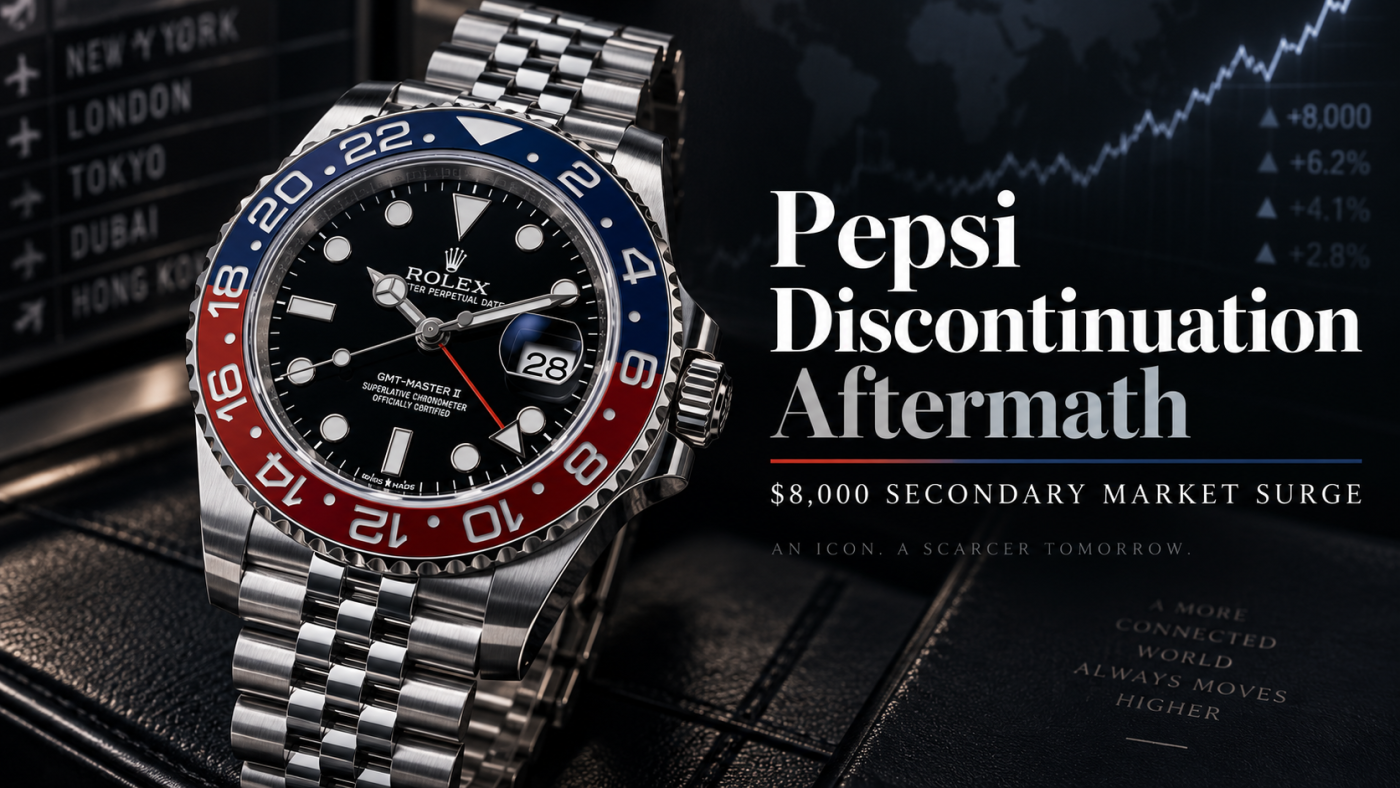
The Pepsi Discontinuation Aftermath: How Rolex Caused an Instant $8,000 Secondary Market Surge.
Sep
Rolex finally did what collectors had been predicting for years.
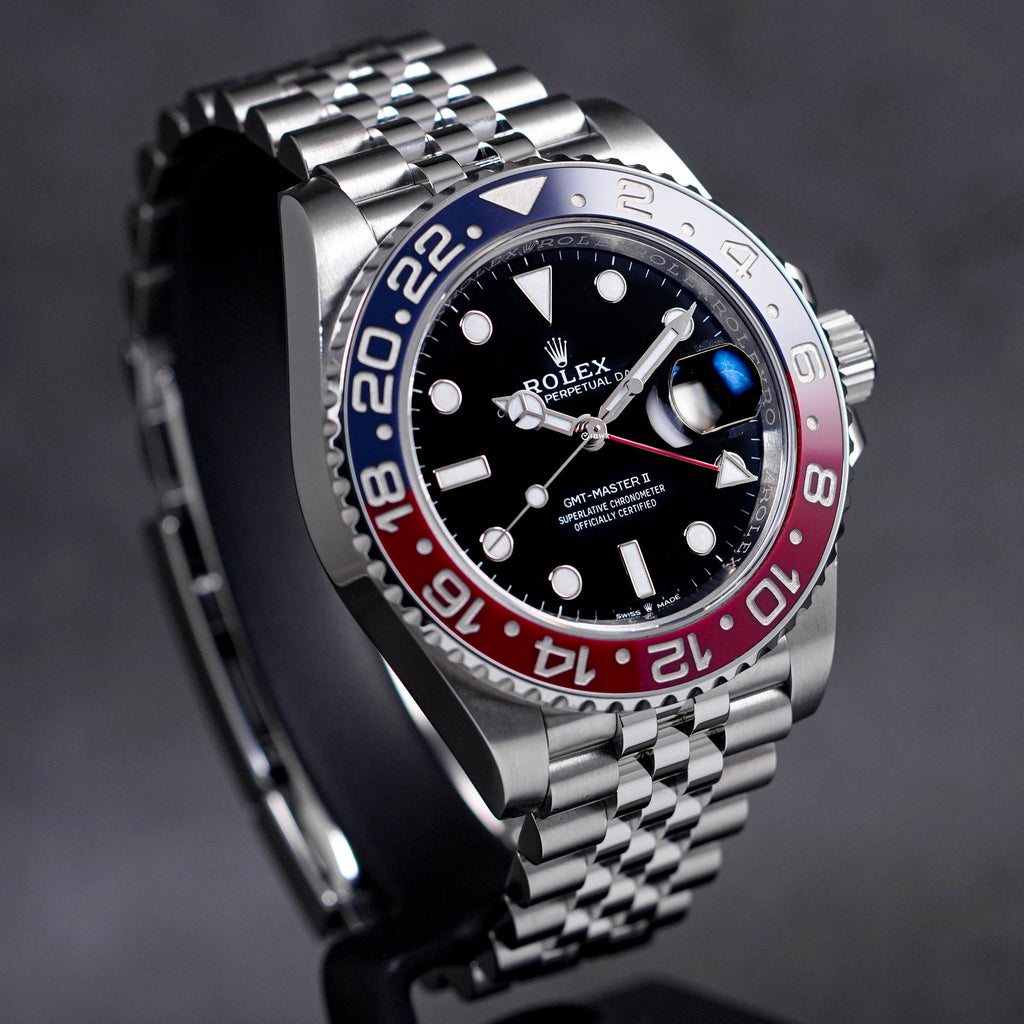
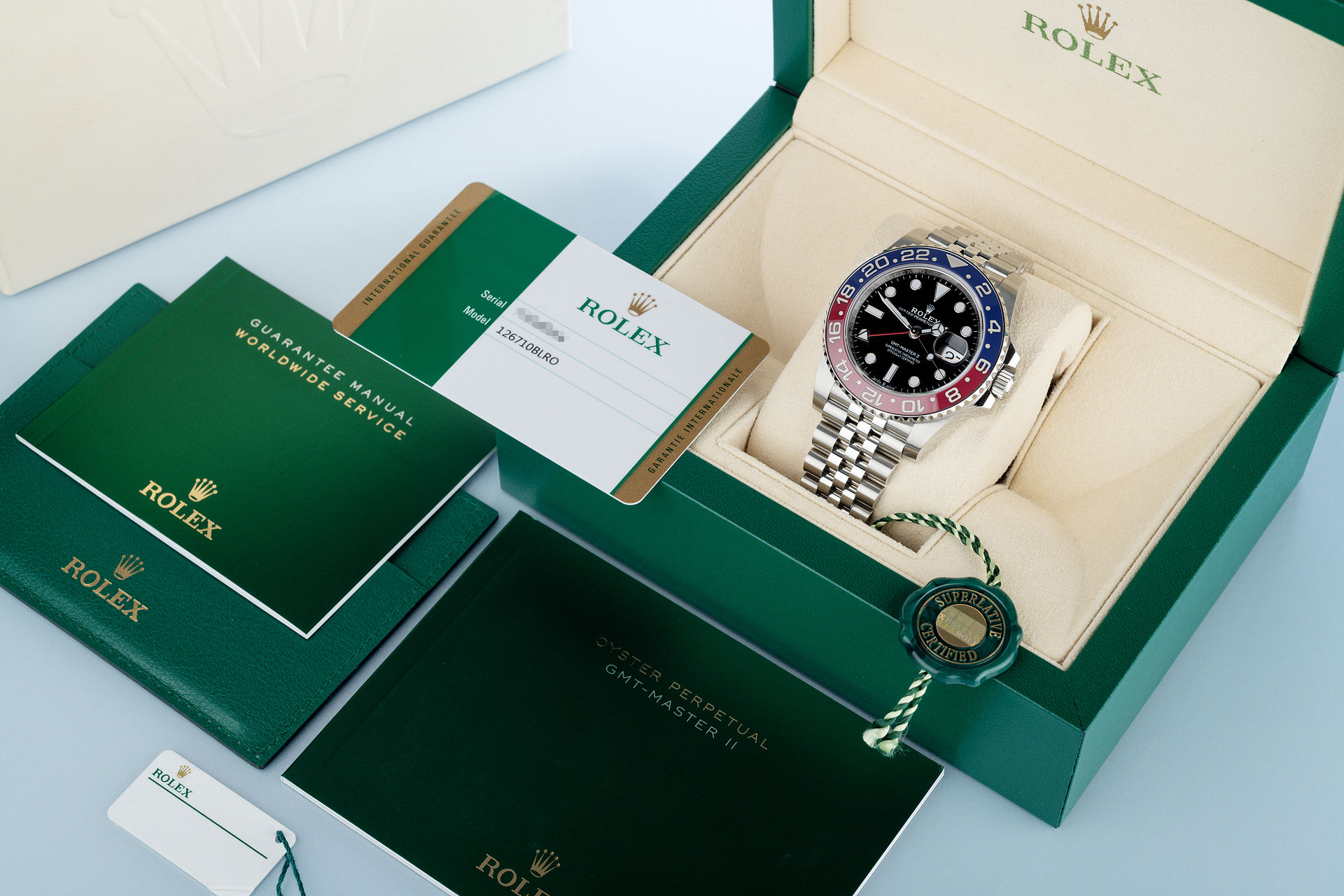
On April 13, 2026, the brand confirmed the discontinuation of the red-and-blue GMT-Master II “Pepsi,” ending production of both the Oystersteel Ref. 126710BLRO and 18k white-gold Ref. 126719BLRO. The announcement immediately transformed one of Rolex’s hardest-to-buy current-production sports watches into a finite collectible.
Quick Answer: The Pepsi discontinuation triggered a violent repricing. Like-new steel examples moved from roughly $24,300 in mid-February to around $28,000 immediately before confirmation and averaged approximately $29,600 in early May. By late 2026, prices had cooled, suggesting the first speculative shock is stabilizing rather than accelerating indefinitely.
The often-repeated “$19,000 to $27,000 overnight” narrative captures what happened in portions of the dealer market, where inventory vanished and asking prices were reset almost instantly. Broader transaction data tells a more interesting story: traders began pricing in the discontinuation before Rolex actually confirmed it.
That distinction matters because the Pepsi is now moving from a production-scarcity trade to a true fixed-supply collector market.
Why Rolex Pulled the Plug: The Myth and Reality of the Ceramic Red Failure Rate
The favorite explanation among dealers and collectors is that Rolex simply became tired of throwing defective Pepsi bezels into the garbage.
There is a legitimate technical foundation behind the story.
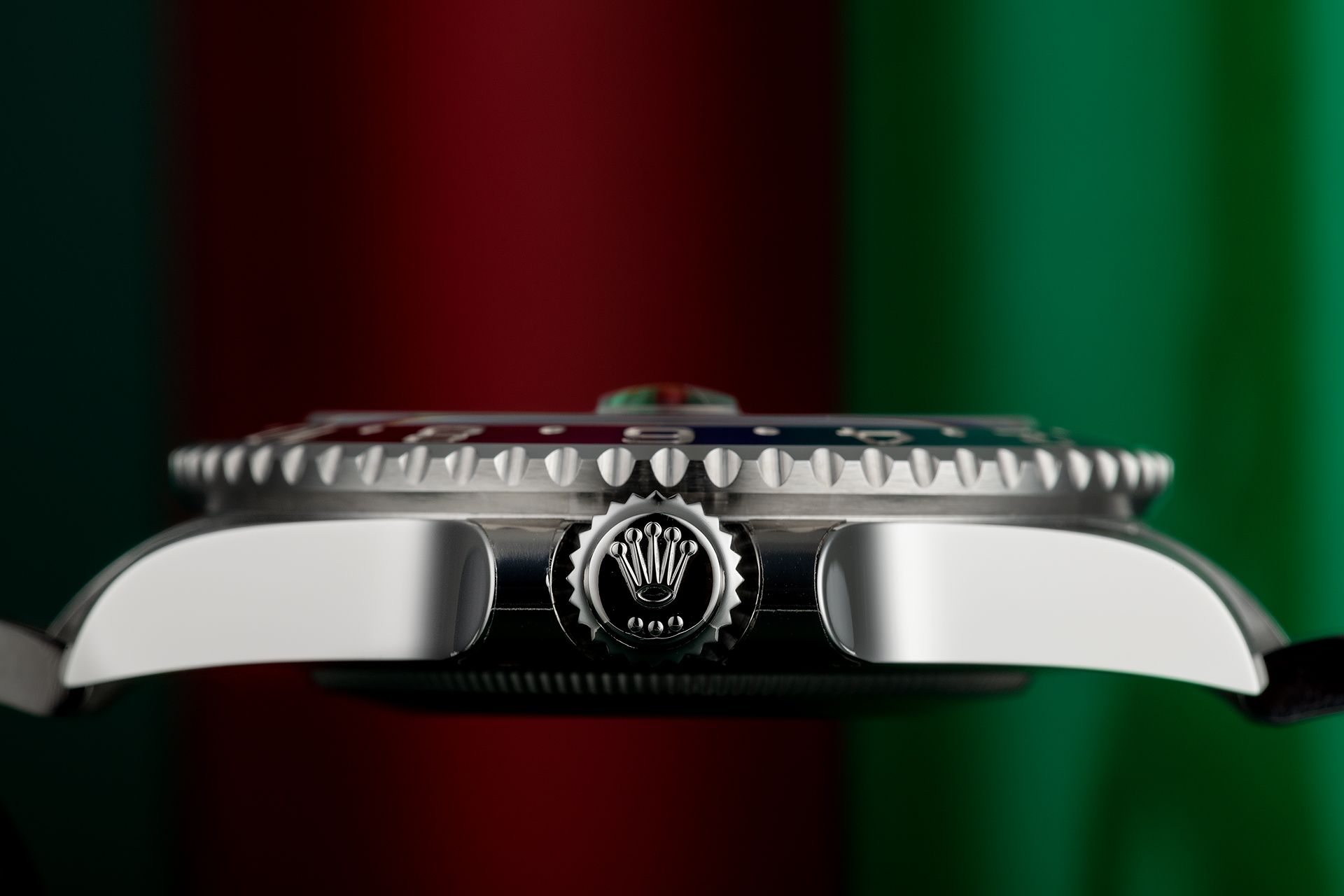
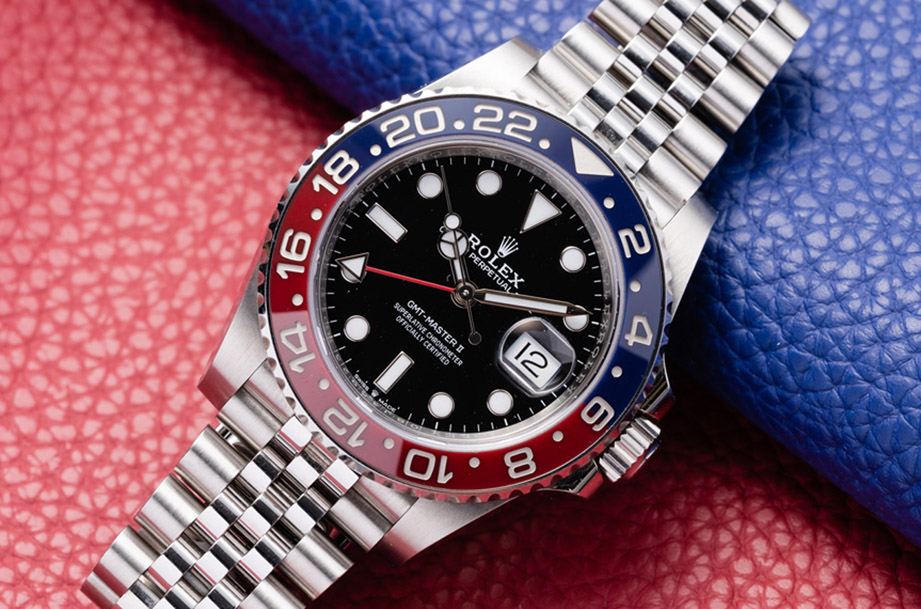
Unlike an aluminum insert painted in two colors, the modern Pepsi uses a single-piece red-and-blue Cerachrom ceramic insert. Rolex states that achieving the combination required years of research. Its process starts with red ceramic and chemically transforms part of the insert into blue using cobalt during production. Rolex itself describes obtaining the two colors in one ceramic component as a technological feat.
Where the story gets murkier is the supposed failure rate.
Numbers such as 50%, 70% or even 80% rejection rates have circulated through dealers, collectors and forums for years, but Rolex has never published such figures.
So the sensible post-mortem is not “Rolex discontinued Pepsi because 80% of bezels failed.”
The evidence supports a narrower conclusion: the BLRO bezel is unusually complex to manufacture, while Rolex was producing a watch whose demand already dramatically exceeded retail supply.
Whether discontinuation was primarily technical, strategic or simply part of Rolex’s product-cycle management remains unknown.
Scarcity, however, is no longer theoretical.
The Steel Surge (Ref. 126710BLRO): Jubilee vs. Oyster Bracelet Pricing Dynamics
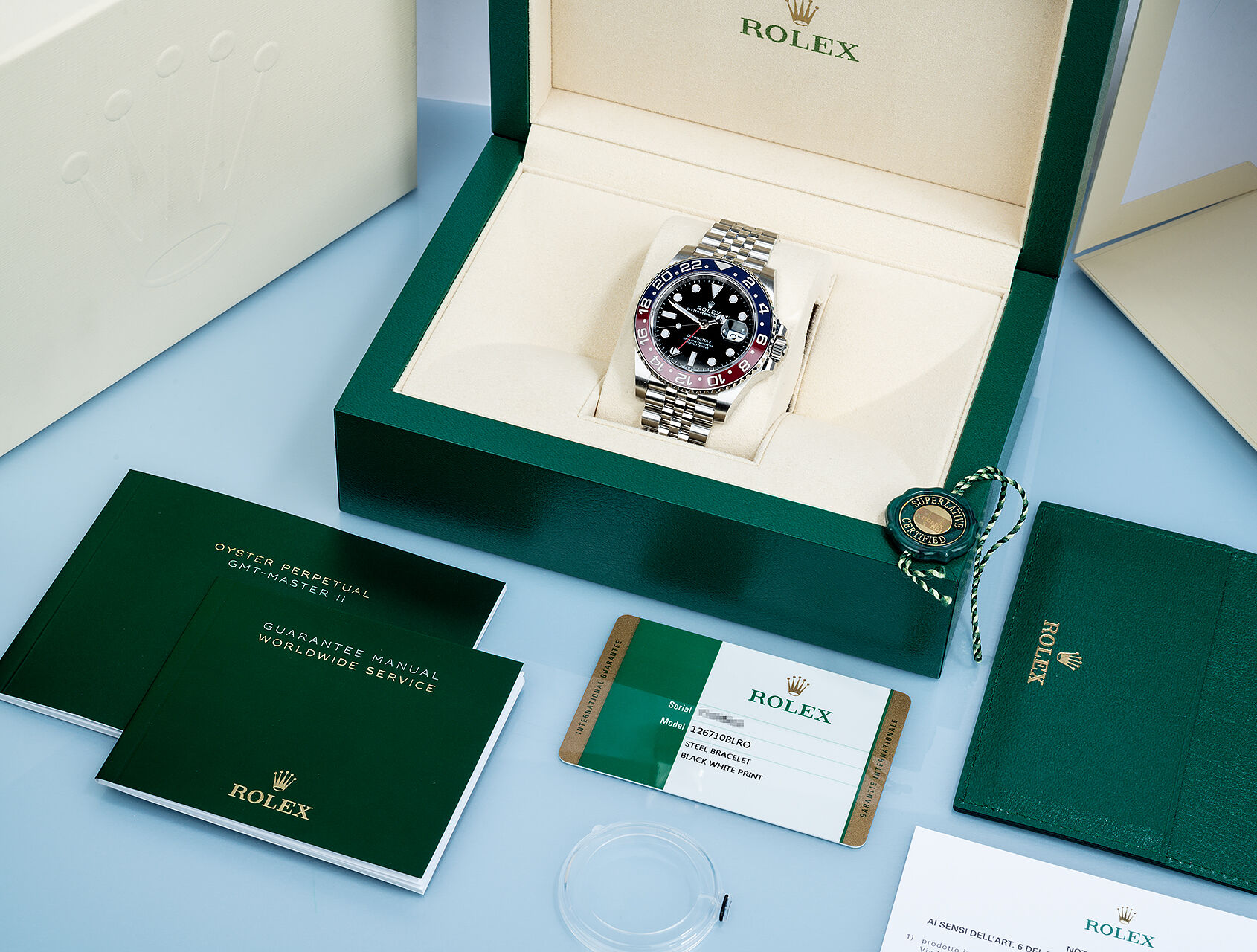
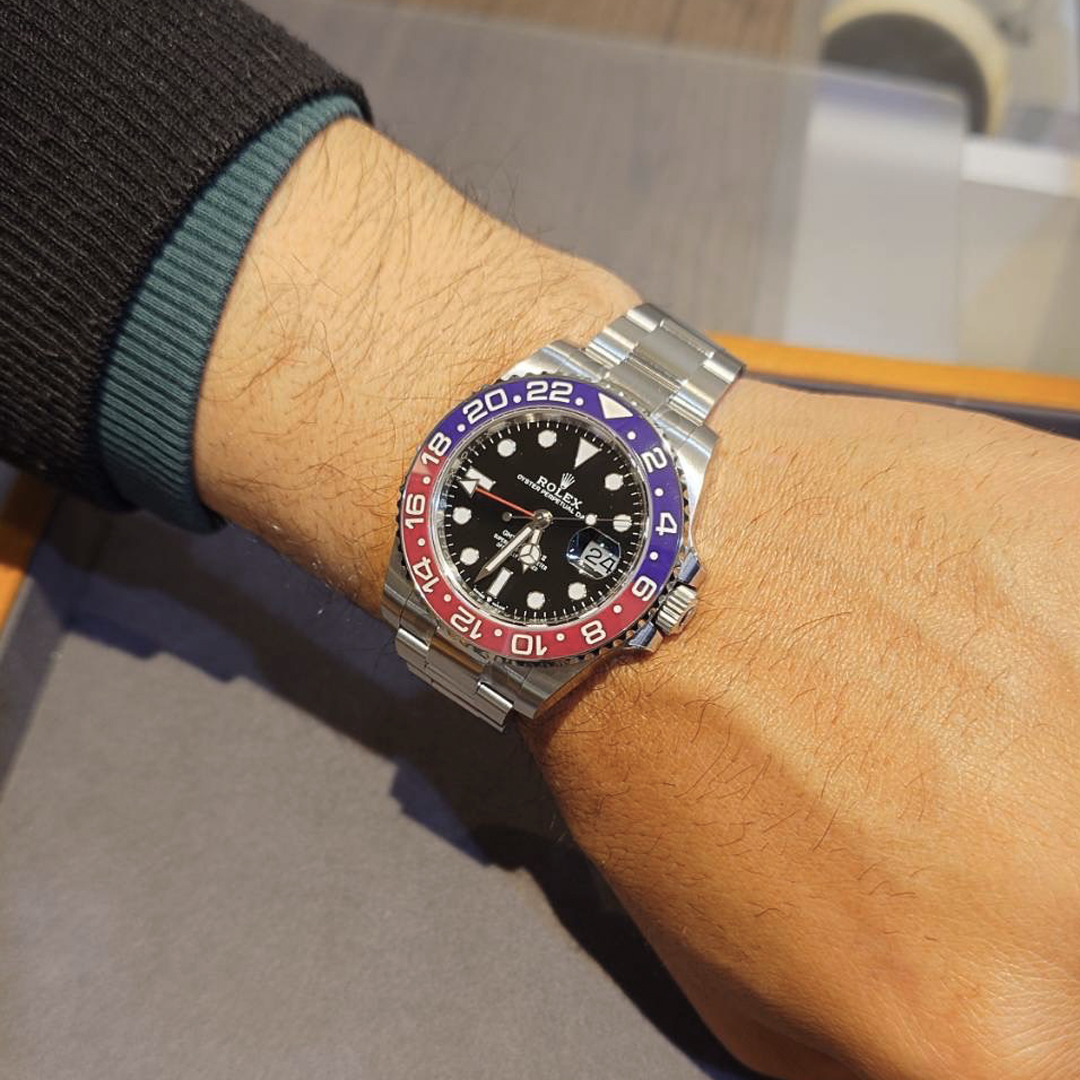
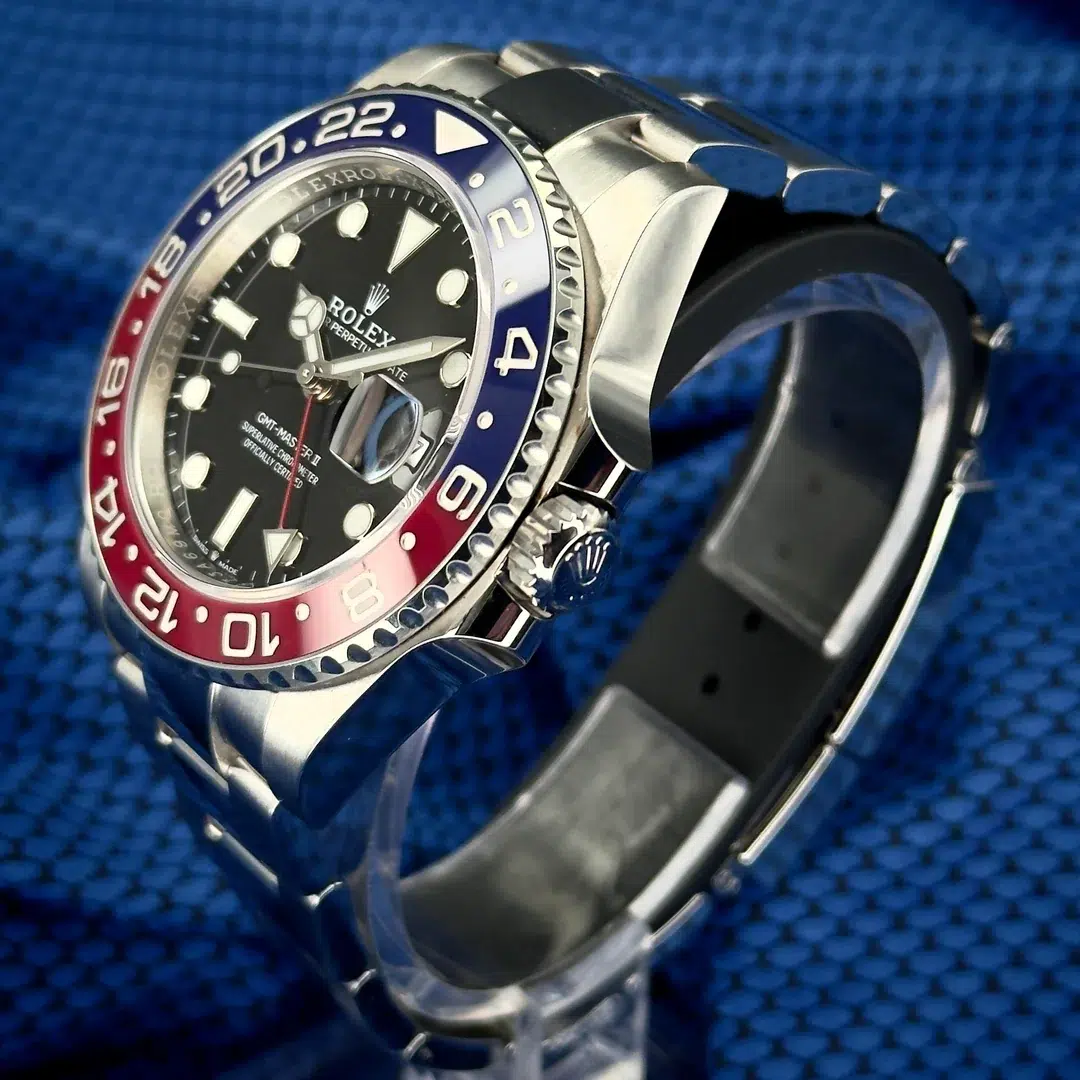
The steel 126710BLRO is where the discontinuation shock became most visible.
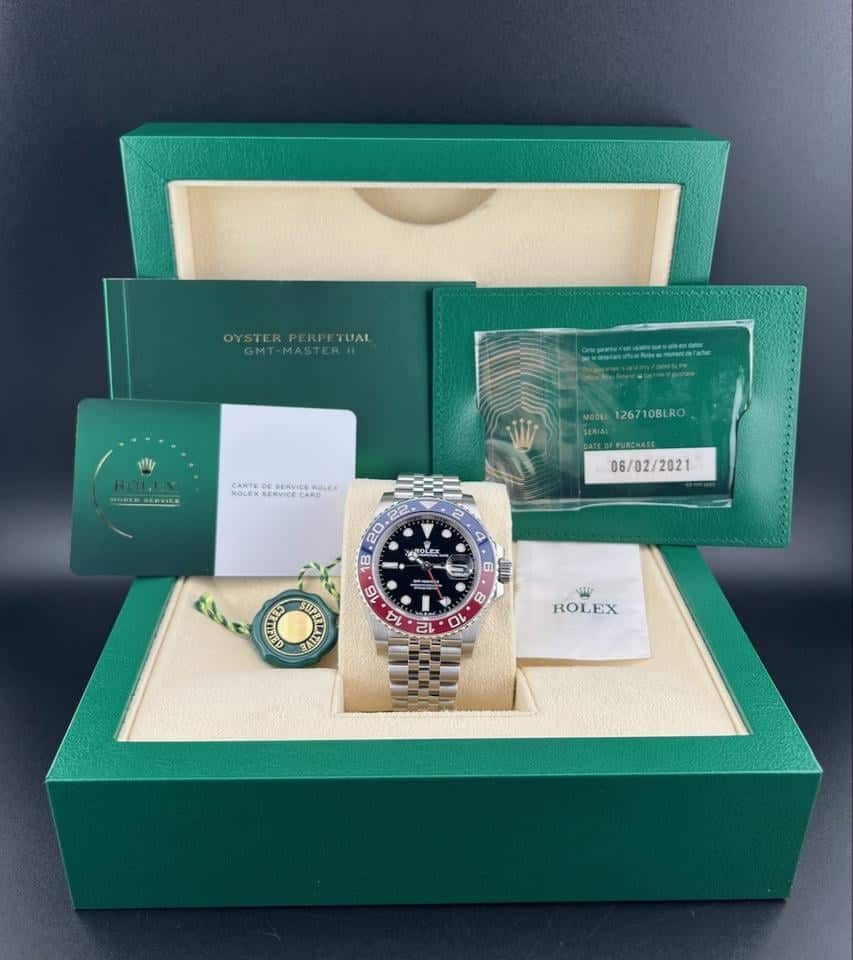
Rolex introduced the reference in 2018 on the five-link Jubilee bracelet. The Oyster-bracelet configuration followed in 2021. Mechanically, the watches are effectively the same: 40mm Oystersteel cases, Calibre 3285 movements, approximately 70 hours of power reserve and the signature bidirectional Pepsi Cerachrom bezel.
Collectors, however, do not price watches with mechanical logic alone. That would apparently be too straightforward.
The Jubilee has become the visual signature of the modern 126710BLRO and generally trades above the Oyster configuration.
Current Luxury Watches USA inventory illustrates how wide dealer spreads can become: an Oyster-bracelet 126710BLRO is listed around $27,900, while a Jubilee example is listed around $33,600. These are retail asking prices rather than an indication that every Jubilee Pepsi is worth $5,700 more.
Across broader market data, the bracelet premium is considerably smaller.
The crucial variables now are:
- Jubilee versus Oyster
- unworn versus pre-owned condition
- complete box-and-papers set
- warranty year
- polishing history
- case sharpness
- dealer reputation and authentication
For discontinued Rolex references, tiny differences begin producing surprisingly large differences in price.
The Ultra-Grail: White Gold Pepsi with Meteorite Dial (Ref. 126719BLRO)
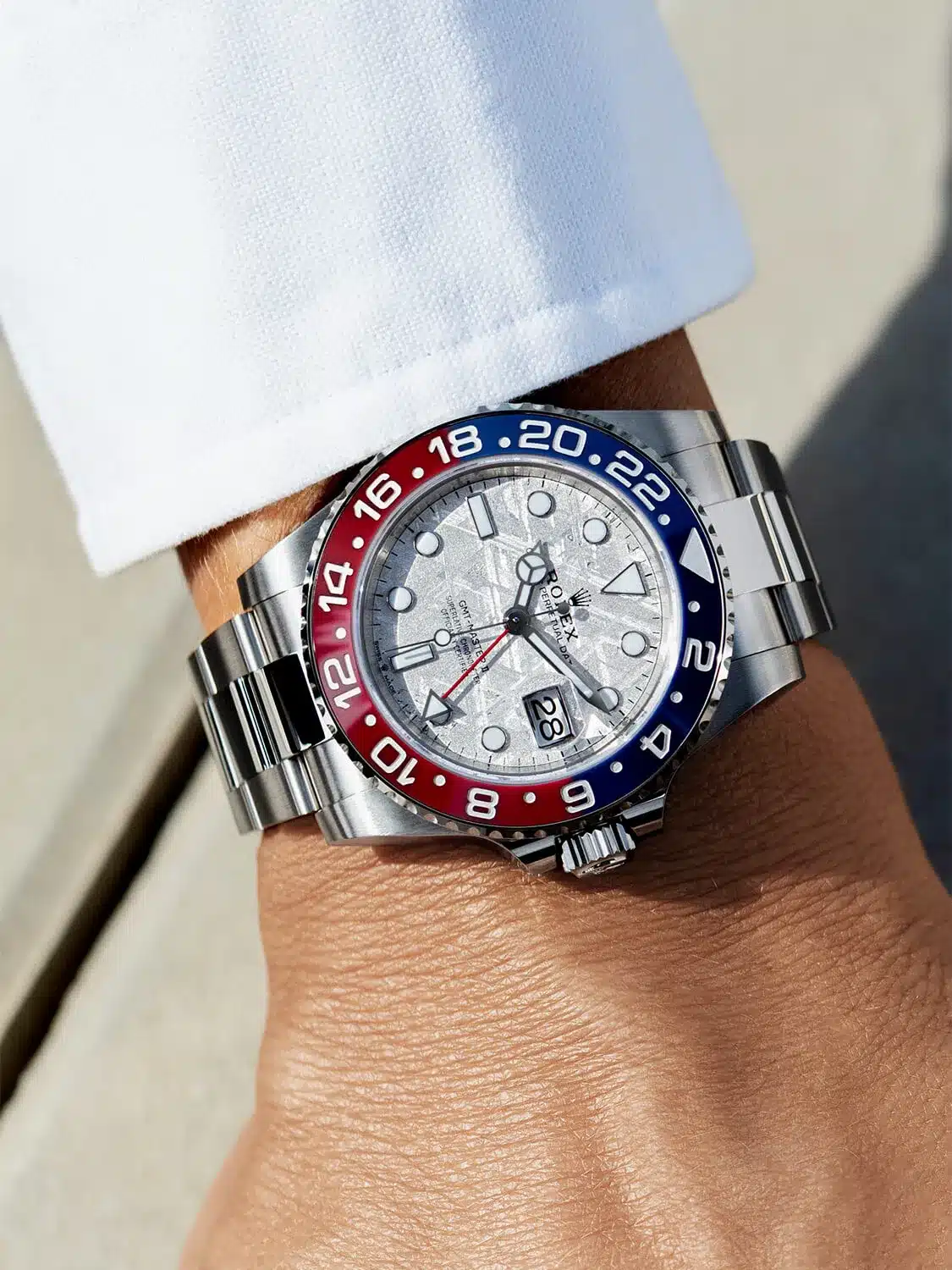
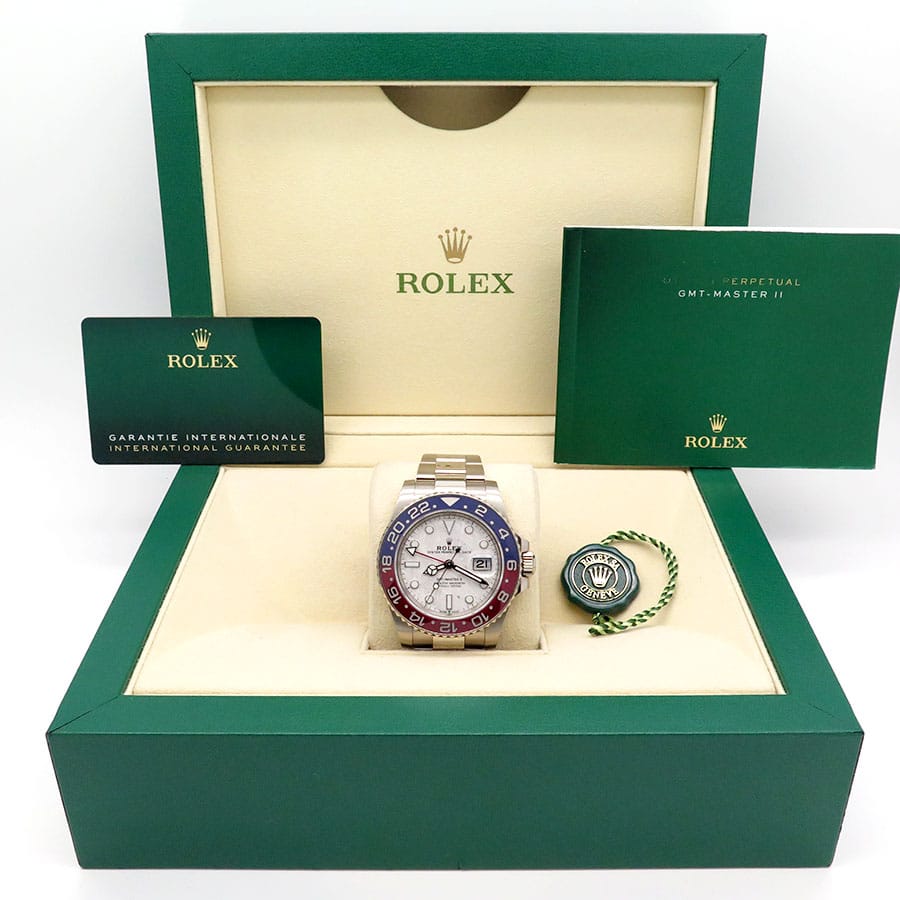
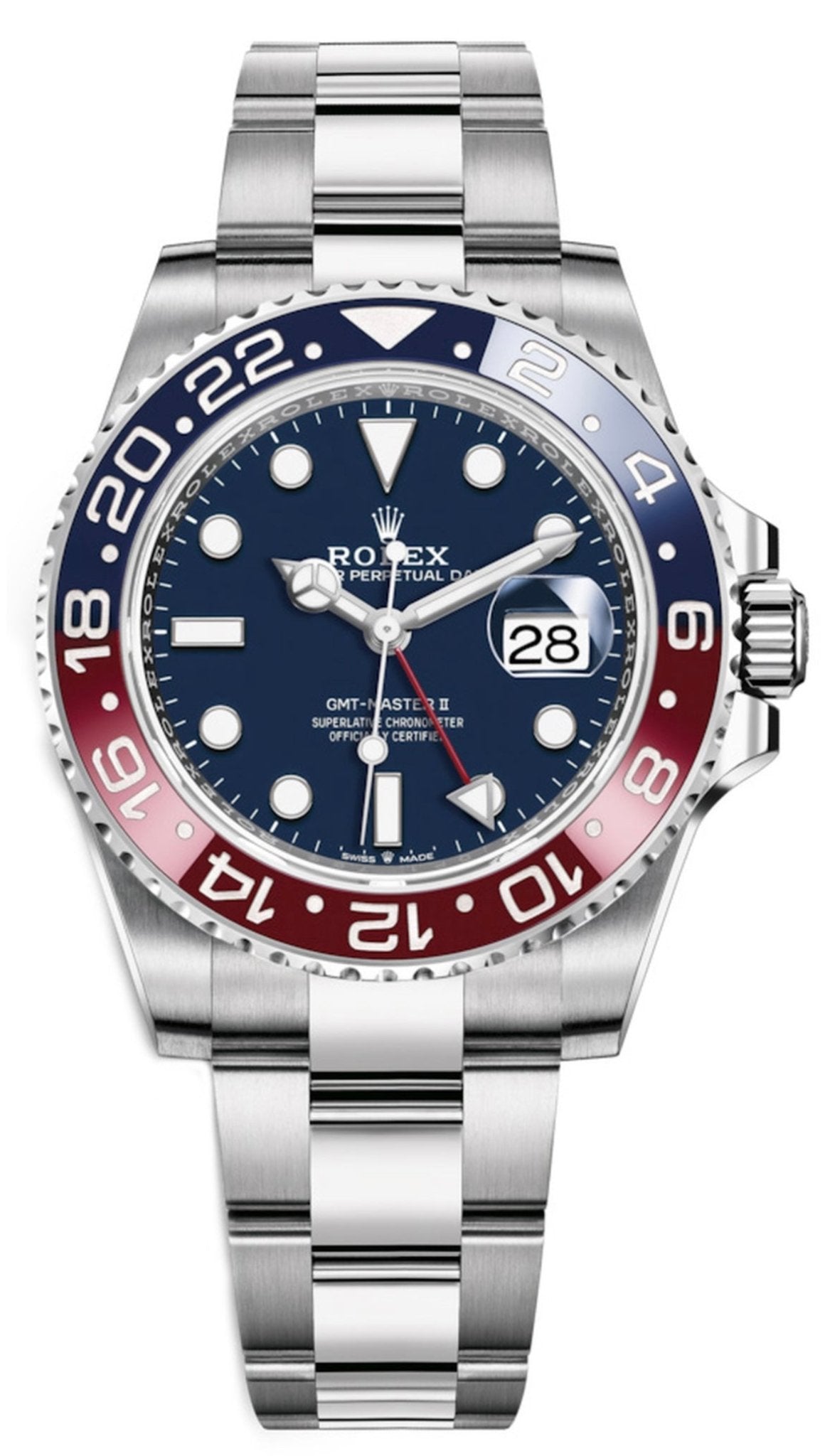
The steel Pepsi generated the headlines. The white-gold Pepsi created the collector problem.
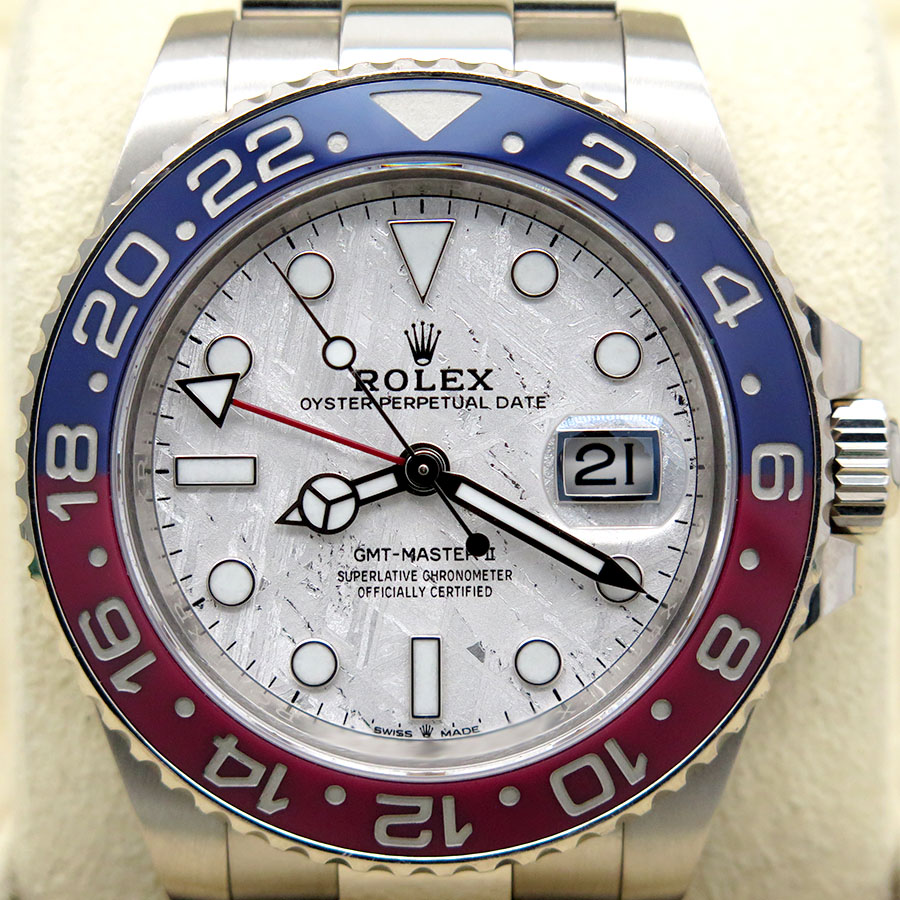
Rolex discontinued both versions of the 126719BLRO: the blue lacquer dial and the far more exotic meteorite dial.
The meteorite version combines a 40mm 18k white-gold case and bracelet with a dial cut from natural meteorite material. Every crystalline Widmanstätten pattern is different, which means no two dials are visually identical.
That gives collectors three scarcity layers simultaneously: discontinued reference, precious metal and naturally unique dial.
But the 2026 market requires some sanity.
WatchCharts estimated the meteorite 126719BLRO-0002 at approximately $56,766 in September 2026. Current dealer listings can be materially higher, including examples in the $60,000s. Luxury Watches USA currently lists a meteorite Pepsi at approximately $73,735.
The model has appeared in six-figure asking-price territory during stronger speculative periods, but that should not be confused with its current normalized transaction value.
Its importance is not that it is automatically a $100,000 watch.
It is that Rolex can no longer manufacture another 126719BLRO meteorite under this production generation.
Historical Comparison Table: Hulk 116610LV vs. Patek 5711 vs. Pepsi 126710BLRO
| Model | Discontinuation Effect | Speculative Peak | 2026 Position |
|---|---|---|---|
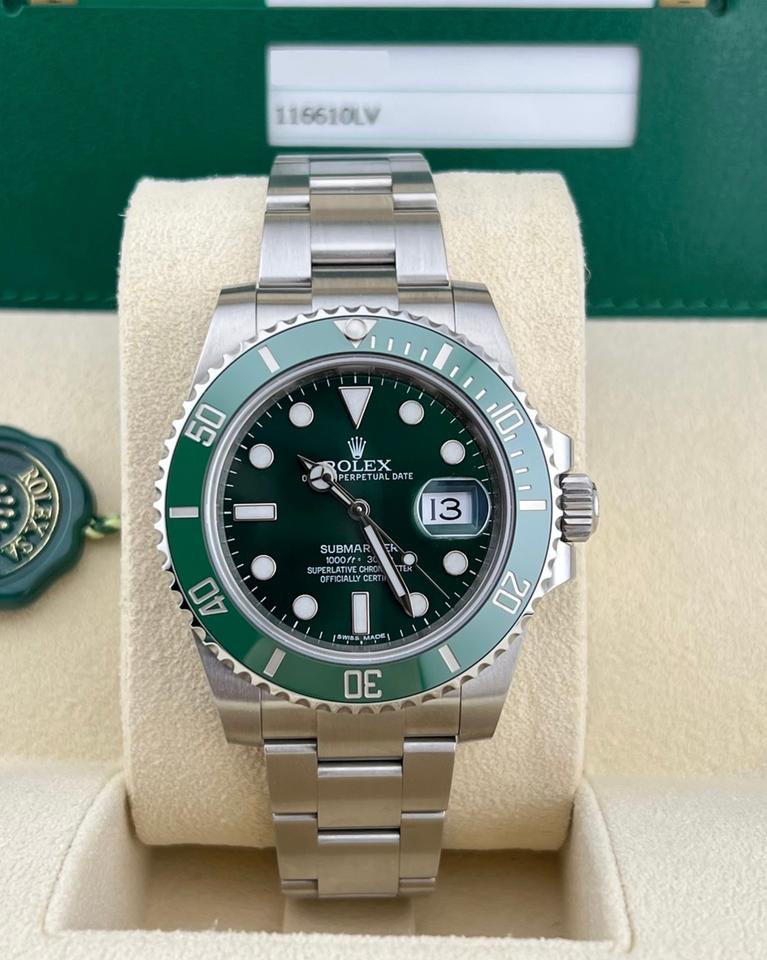
| Rolex Submariner Hulk 116610LV | Immediate scarcity premium after 2020 discontinuation | Strong 2021–22 appreciation | Around $18,000–$20,000 market range |
| Patek Philippe Nautilus 5711/1A-010 | Massive repricing after discontinuation | Nearly $200,000 around the 2022 market peak | About $126,000 in Sept. 2026 |
| Rolex Pepsi 126710BLRO | Rumor-driven rally followed by April 2026 confirmation | Around $29,600 average in early May | Dealer asks remain high, while underlying market estimates have cooled |
The Nautilus provides the clearest warning against assuming that discontinued equals permanently vertical.
The steel 5711 traded near $200,000 at the April 2022 market peak before falling sharply. The blue-dial 5711/1A-010 is around $126,000 in September 2026.
The Hulk followed a similar, less extreme cycle and currently sits around the high-$18,000s on WatchCharts.
The lesson for Pepsi buyers is uncomfortable but useful: permanent scarcity and temporary overpricing can exist simultaneously.
Buy Now or Wait for the Dip? Practical Advice for Luxury Watch Collectors in 2026
The first stage of the discontinuation trade has already happened.
Chrono24 recorded like-new examples at around $24,300 in mid-February 2026, approximately $28,000 on April 12, and roughly $29,600 in early May. By mid-August, the average had slipped to about $28,900.
WatchCharts saw an even more revealing signal: listings surged to an all-time weekly high immediately after discontinuation as owners attempted to monetize the news. Increased supply then helped push prices down slightly.
For collectors, that creates three distinct markets.
A strong pre-owned full set around the low-to-mid $20,000s represents the closest thing to underlying market pricing.
A mint or unworn example in the upper $20,000s includes a condition and immediacy premium.
A $30,000-plus example needs unusually strong justification: year, condition, Jubilee configuration, provenance or dealer protection.
Buying after a discontinuation is not inherently wrong. Buying because someone on Instagram wrote “LAST CHANCE BEFORE $40K” is a somewhat less sophisticated investment methodology.
5 Critical FAQs About the Discontinued Rolex Pepsi
1. Is the Rolex Pepsi really discontinued?
Yes. Rolex discontinued the 126710BLRO in Oystersteel and 126719BLRO in white gold in April 2026.
2. Did prices really increase by $8,000 overnight?
Some dealer asks effectively made that move, particularly when comparing earlier $19,000–$22,000 levels with post-announcement listings approaching or exceeding $27,000. Broader Chrono24 data shows the main 2026 move developed over several weeks rather than literally one night.
3. Which Pepsi is more valuable, Jubilee or Oyster?
Jubilee generally carries the stronger collector premium because it is closely associated with the 2018 relaunch. The exact premium changes with condition, year and seller.
4. Will the Pepsi reach $40,000?
There is no defensible way to guarantee that. The fixed supply supports long-term scarcity, while the Hulk and Nautilus demonstrate that post-discontinuation markets can overshoot dramatically before correcting.
5. Could Rolex release another Pepsi?
Certainly. The red-and-blue bezel is deeply embedded in GMT-Master history. But a future Pepsi would be a new reference or configuration. It would not restart production of the discontinued 126710BLRO.
Acquire an Authenticated Rolex GMT-Master II at Luxury Watches USA
The disappearance of the Pepsi from Rolex production makes authentication and provenance increasingly important.
Luxury Watches USA currently lists multiple Pepsi generations, including steel 126710BLRO Oyster and Jubilee models, white-gold BLRO references and the meteorite 126719BLRO. Its dedicated GMT-Master II catalog also includes alternative GMT configurations for buyers comparing the discontinued Pepsi with current-production references.
Shop Rolex GMT-Master II at Luxury Watches USA
For watches physically available in the NYC inventory rather than sourced after purchase:
View Live Luxury Watch Inventory
The Pepsi story is ultimately a textbook example of what happens when brand mythology, technical difficulty, constrained supply and speculative capital collide simultaneously.
Rolex stopped producing the watch.
The first market reaction was emotional.
What happens next will depend on how much collectors are willing to pay once the excitement fades and scarcity becomes ordinary reality.
 Free Shipping for all orders