


















Sep
When you hold a Rolex watch, you’re holding the product of four specialized Swiss facilities, over six thousand employees, and a vertically integrated manufacturing system that Rolex owns from raw metal to finished timepiece. Swiss Made certification requires at least 60% of manufacturing costs in Switzerland — Rolex exceeds this entirely, conducting 100% of production in-house. As the official Rolex geography of excellence page details, this integration is central to both quality and investment value.
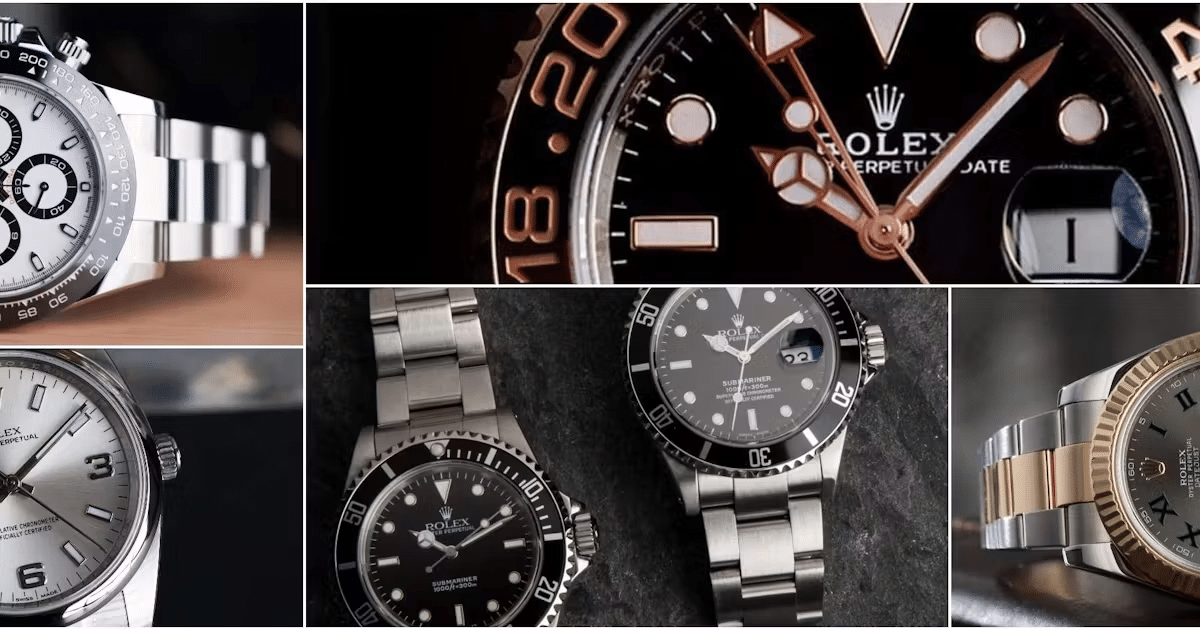
Every Rolex in our inventory has passed the same Superlative Chronometer standards set in these facilities. Browse our collection.
From London Startup to Swiss Icon
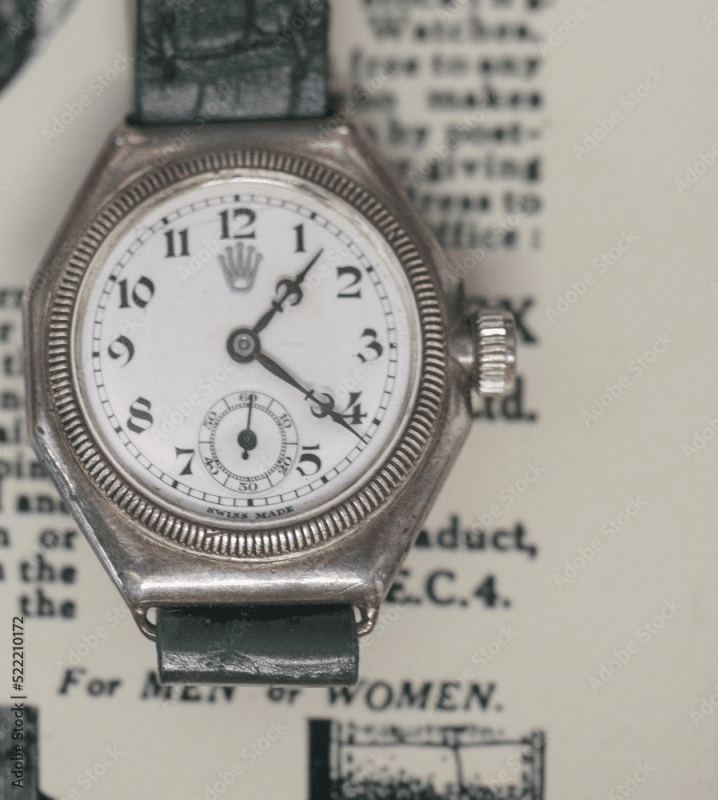
Hans Wilsdorf founded Wilsdorf and Davis in London in 1905 as a distributor of Swiss-made movements in English cases. By 1919, Wilsdorf relocated entirely to Geneva, where the company became Rolex Geneva S.A. Two technical breakthroughs then cemented Rolex’s position:
1926 — The Oyster Case
The world’s first waterproof wristwatch, featuring a patented screw-down crown, bezel, and caseback. Rolex validated it by sponsoring Mercedes Gleitze’s 1927 English Channel swim — she wore the Oyster around her neck for over 10 hours in frigid water, and it emerged in perfect working order. The complete Oyster story remains one of the most effective product demonstrations in marketing history.
1931 — The Perpetual Rotor
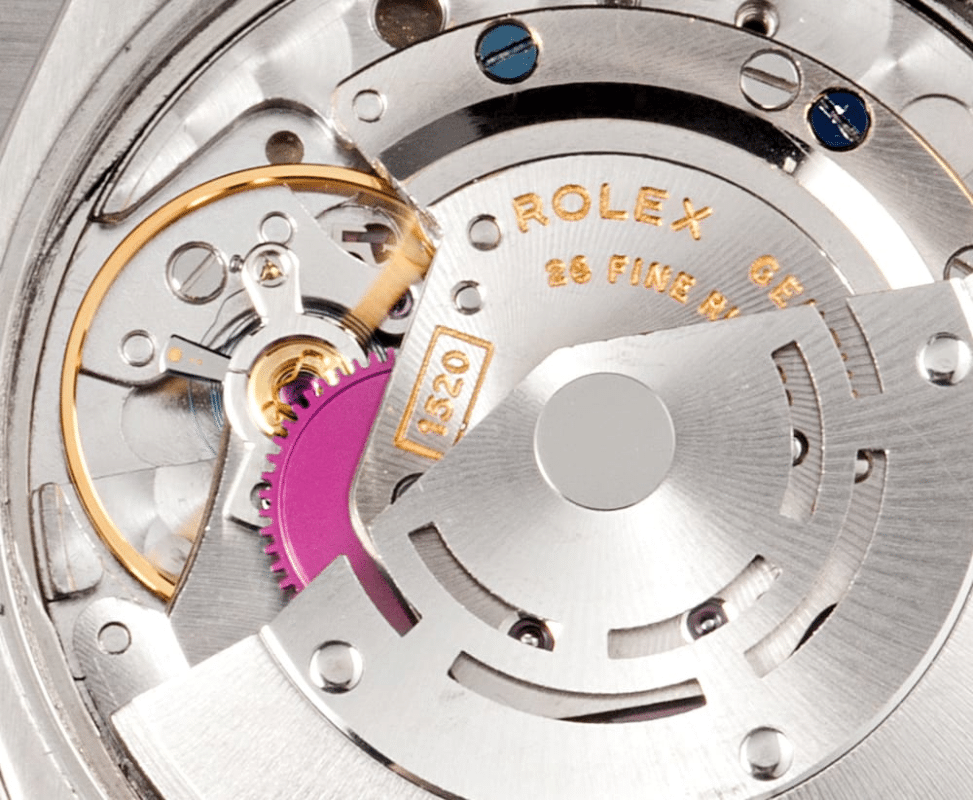
The first reliable automatic self-winding mechanism for wristwatches — a centrally-mounted, 360-degree rotating weight that captures energy from wrist movement. Rolex held the patent exclusively until 1948. As Monochrome’s history of the automatic watch documents, the entire industry subsequently adopted similar systems. Every automatic watch in the world today owes something to this invention.
Rolex’s Four Swiss Manufacturing Facilities
Acacias, Geneva — Headquarters and Final Assembly
The distinctive green-glass building in Geneva’s Acacias district has been Rolex’s command center since 1965. This is where executive leadership, R&D, design, and final watch assembly are housed. Every completed Rolex undergoes Superlative Chronometer testing here — Rolex’s own certification requiring accuracy of ±2 seconds per day, far exceeding COSC standards of ±4 to ±6 seconds. Per the official Rolex Superlative Chronometer brochure, this testing covers the complete assembled watch — not just the movement — ensuring real-world performance. Over 500 patents have been registered from this location.
Plan-les-Ouates — Materials and Case Production
A massive 58-acre, eleven-story complex (six floors underground for security) houses Rolex’s foundry and case manufacturing. Here Rolex smelts and alloys its own precious metals: 18k yellow gold, 18k white gold, and proprietary Everose rose gold — stabilized with platinum to resist fading over decades. The facility also produces Oystersteel — Rolex’s exclusive 904L stainless steel, offering superior corrosion resistance versus the 316L used by most other watchmakers. Advanced ceramic manufacturing creates virtually scratchproof Cerachrom bezels.
Chêne-Bourg — Dials, Gems, and Aesthetics
This Geneva-vicinity facility specializes in dial production, gem-setting, and ceramic finishing. Master gemologists set diamonds and precious stones with microscopic precision; artisans who hand-set pavé dials undergo years of specialist training. The facility’s ceramic department also develops Cerachrom technology, producing bezels that resist scratching, fading, and corrosion for decades.
Bienne — The Movement Factory
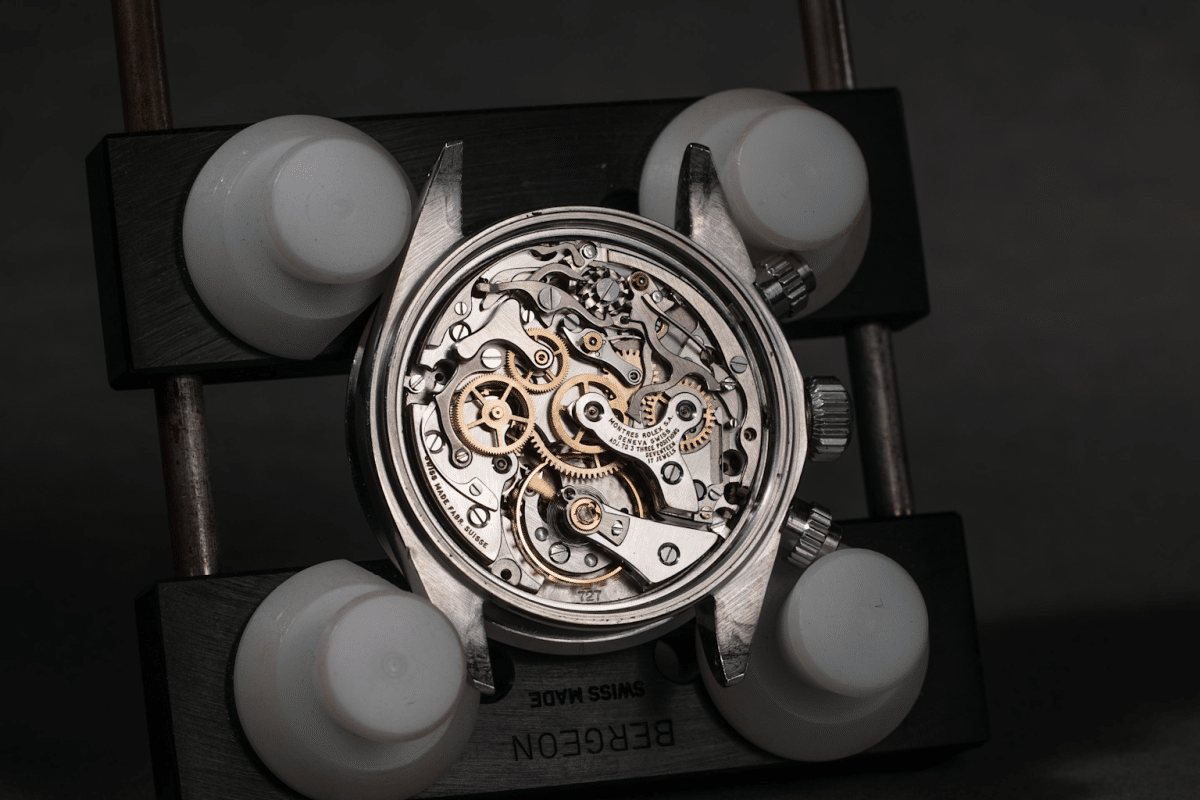
Located in the Jura Mountains, the 92,000 sq meter Bienne facility employs over 3,000 specialists. As Petite Genève’s Bienne manufacturing report details, 200 to nearly 400 components comprise different Rolex calibers, each machined to tolerances measured in thousandths of millimeters. Advanced automated storage systems with 46,000 compartments ensure precise component delivery to over 1,200 metres of production rails. Movements are hand-assembled by watchmakers who train for years before working independently.
Why Vertical Integration Drives Value Retention
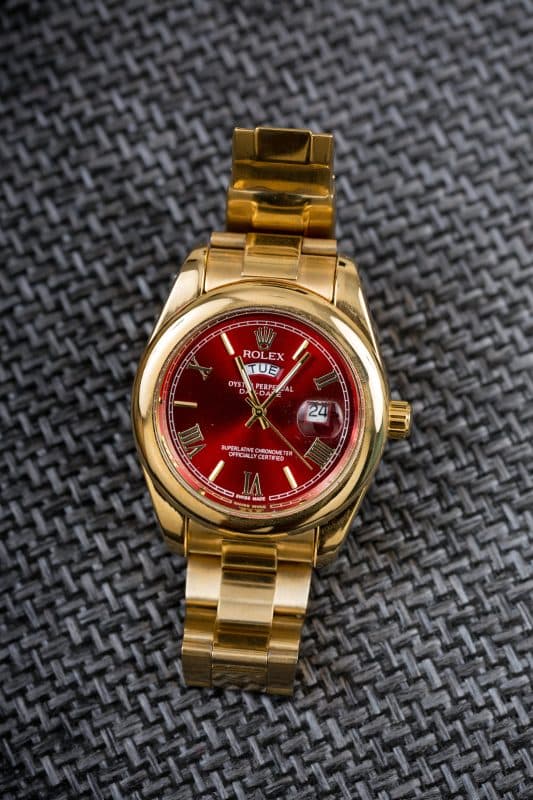
Most Swiss manufacturers — including many far more expensive brands — outsource ébauches (base movements), cases, or dials to external suppliers. Rolex produces everything internally. Proprietary materials (Oystersteel, Everose, Parachrom hairspring, Cerachrom) cannot be replicated by competitors. Annual production — estimated by Watches Digest and Zealande at 1.0–1.25 million pieces — remains deliberately constrained relative to global demand. Certain models like the Day-Date and Daytona experience 10–25% annual appreciation. The pre-owned luxury watch market, valued at $30 billion, demonstrates Rolex’s investment appeal, with vintage and discontinued models routinely commanding premiums above original retail.
- ~100,000–150,000 Submariner models produced annually
- ~20,000–30,000 Daytonas annually
- Waiting lists of 2–3 years for popular steel sports references
- As Yahoo Finance reported, Rolex continues expanding production to meet surging demand — while maintaining quality standards
Selling your Rolex? Get a same-day competitive offer from our specialists.
Modern Innovations and the Future
- Parachrom hairspring (2000): Ten times greater shock resistance and complete magnetic immunity vs. traditional steel hairsprings
- Paraflex shock absorber (2005): 50% greater impact protection than conventional systems
- Cerachrom bezels: Virtually indestructible ceramic surfaces, immune to UV fading
- Bulle facility (2029): A $1 billion investment adding ~2,000 employees and significant production capacity — as reported by Yahoo Finance
FAQ
Rolex is made entirely in Switzerland across four specialized facilities: headquarters and final assembly in Acacias (Geneva), case and materials production at Plan-les-Ouates, dial and gem-setting at Chêne-Bourg, and movement manufacturing at Bienne in the Jura Mountains. Every component — metals, ceramics, movements, and dials — is produced in-house. Per the official Rolex geography of excellence page, no external suppliers are used for core components.
Yes. Rolex far exceeds Switzerland’s legal “Swiss Made” requirements (minimum 60% of manufacturing costs in Switzerland). Rolex conducts 100% of its manufacturing, materials sourcing, and final assembly in Switzerland — making it one of the most vertically integrated watch manufacturers in the world.
Industry estimates place Rolex annual production at 1.0–1.25 million watches, including an estimated 100,000–150,000 Submariners and 20,000–30,000 Daytonas annually. Despite this output, demand consistently exceeds supply for the most desirable steel sports references, creating waiting lists and the secondary market premiums that define the modern Rolex market.
Oystersteel is Rolex’s proprietary designation for 904L stainless steel — a high-alloy steel normally used in aerospace and chemical engineering, containing higher concentrations of chromium, nickel, and molybdenum than the 316L steel most watchmakers use. It is significantly more corrosion-resistant and capable of taking a higher, more enduring polish. Rolex is one of very few manufacturers to use 904L steel across their entire stainless range.
Yes. All Rolex movements are designed, engineered, and assembled entirely in-house at Bienne. No externally sourced ébauches or third-party components are used. Current production calibers: Caliber 3235 (most sports models), 3135 (legacy sports), 2236 (ladies’ models), and 4130 (Daytona chronograph). The Rolex collection spans all of these calibers in authenticated pre-owned inventory.
 Free Shipping for all orders