

















Feb
The question of whether Cartier watches are worth the investment is increasingly relevant in the 2026 secondary market. Vintage Cartier watches tend to hold and appreciate in value when properly selected, maintained, and sold into active markets. Unlike many luxury goods that depreciate rapidly, Cartier’s iconic designs and heritage positioning create stable demand among collectors and professionals.
However, not all vintage pieces perform equally—model, condition, originality, and market timing significantly influence returns. If you are selling vintage watches, particularly within the NYC Diamond District, understanding the nuance of “investment grade” vs. “fashion grade” is the difference between a profit and a loss.

Ready to liquidate your vintage Cartier collection for a market-leading cash payout? We provide full-service escrow protection and comprehensive title verification for every high-value transaction.
Executive Summary: Key Investment Takeaways
- Value Retention: Vintage Cartier watches typically retain 60–99% of original retail value depending on model, condition, and rarity.
- Iconic Anchors: The Cartier Tank, Cartier Santos, and Crash models show the strongest appreciation potential.
- Material Multipliers: Solid gold and platinum pieces significantly outperform stainless steel counterparts in long-term value retention.
- Documentation Premium: Original condition, box, papers, and service history directly impact resale pricing by 10–30%.
- Historical Advantage: Vintage models from the 1970s–1990s offer better entry points than current retail without sacrificing collectibility.
This analysis reflects observed secondary-market pricing and collector behavior as of 2026. It is intended for buyer education and comparative analysis, not financial or investment advice.
The Reality of the Vintage Market
Reality check: Investing in vintage watches differs fundamentally from traditional financial instruments—there’s no guaranteed liquidity. New Cartier watches typically experience 10–20% depreciation immediately. Vintage pieces already past this phase occupy a different economic position. A well-maintained Tank or Santos from the 1980s purchased at $3,000–$6,000 may hold stable value or appreciate modestly as supply tightens.
Example: A 1970s Cartier Tank originally retailing for approximately $1,000 can trade in today’s secondary market for $8,000–$12,000. While this represents significant appreciation over 50 years, the market is not frictionless. You must budget for authentication reviews, storage, and eventual resale fees.

Looking to establish absolute certainty before you list your vintage timepiece? Our master horologists provide forensic-level verification to ensure your Cartier commands its full market premium.
Vintage Models That Command Premiums
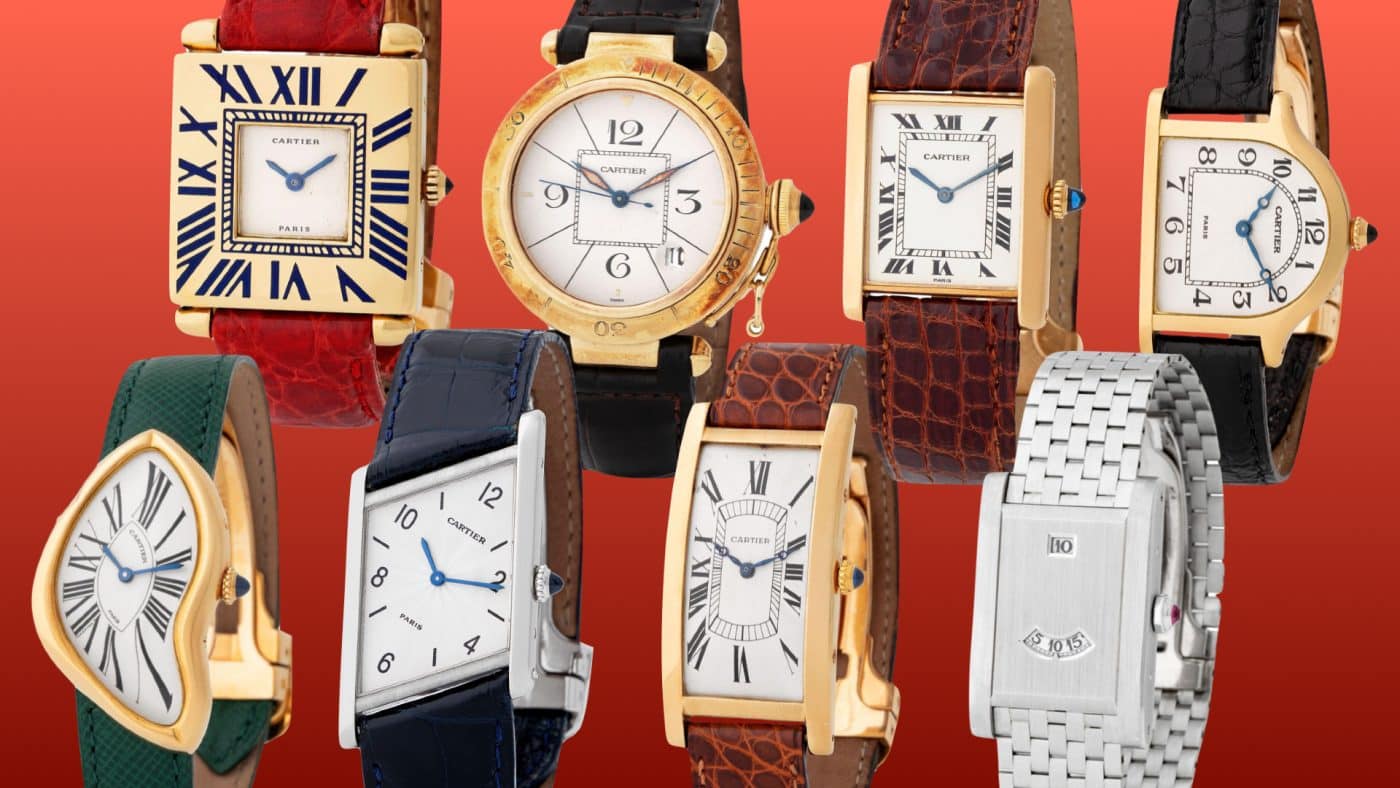
The Tank, Santos, and Crash represent the highest-probability vintage investments based on historical transaction data and secondary-market liquidity.
1. The Tank: The Foundation
Launched in 1917, the Tank remains Cartier’s most recognizable design. Its rectangular case and clean proportions ensure steady collector interest from both fashion and horological purists.
2. The Santos: The Professional’s Icon
Current production Santos watches trade with 80–113% of retail value in excellent condition. Vintage variants, particularly gold examples, command premiums as rarity increases over time.
3. The Crash: The Collectible Outlier
The Cartier Crash is an extremely limited production run. Vintage examples regularly command $100,000+ at auction. With only a few dozen new pieces produced annually, supply is extraordinarily constrained compared to mass-market brands like Rolex.
Factors Driving Value in the Secondary Market
Five core factors determine whether a vintage Cartier appreciates or holds steady: 1. Rarity and Production Volume: Discontinued models command premiums as supply dries up. 2. Material Quality: Pieces in solid gold or platinum retain value better than gold-plated or vermeil alternatives. 3. Design Heritage: Iconic silhouettes maintain cultural relevance across decades. 4. Condition and Originality: Unpolished cases and original dials preserve maximum value. 5. Documentation: Original box, papers, and service history add 15–30% to typical asking prices.

Not sure how current market corrections have affected your specific Cartier reference's value? Book a private virtual appointment for a portfolio audit and valuation.
Buying and Selling Strategy
Secondary-market liquidity for Cartier is solid, but not instantaneous. If you need to sell a vintage Santos within two weeks, expect to accept 5–15% below asking to incentivize a rapid sale. For buyers seeking undervalued opportunities, track references for 30–60 days to establish pricing floors and focus on pieces needing minor cosmetic restoration that doesn’t compromise movement integrity.
Protective Steps for Collectors: – Request detailed photographs of the dial, hands, and case back. – Verify serial numbers against historical production records. – Insist on a clear condition description distinguishing cosmetic wear from functional defects. – Match your entry price to established secondary benchmarks seen at Patek Philippe or high-end dealer catalogs.

Frequently Asked Questions
They add 15–30% to resale value, but strong examples without papers still hold 75–90% of market price. They are desirable but not mandatory for a sound buy.
Mechanical movements require service every 5–10 years ($400–$800). Storage and insurance add another $150–$300 annually.
Yes, because supply is fixed and new models suffer immediate depreciation. Expect a reliable 3–7% annual appreciation over long horizons.
Solid gold and platinum outperform steel, retaining 85–99% vs. 60–80% for steel counterparts.
Hold for 3–5 years to allow the market to weather cycles and justify your initial transaction costs.
Aftermarket dials or non-original movements. Always request a professional authentication review before committing capital.
Dealers offer authentication certainty and return policies; auctions offer price discovery but carry more risk for unverified pieces.
Only if cosmetic, like a dial cleaning. Major movement services often cost more than the value they add to the final sale price.
Rare models and Cartier Panthère iconics hold value better than mass-market luxury goods during recessions. Plan for 5-10 year holds to weather cycles.
 Free Shipping for all orders