

















Dec
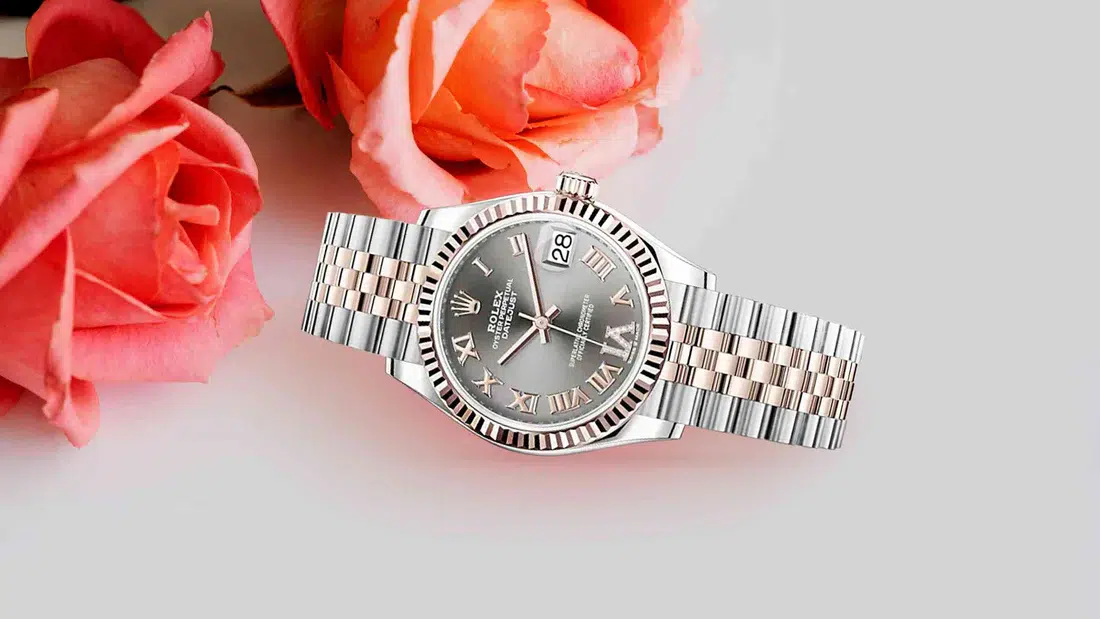
For decades, the standard for women’s luxury wristwear was defined by delicate, understated proportions. However, the modern luxury landscape has shifted toward bold, statement-making pieces. Today, the Rolex Lady-Datejust 28 and the mid-size Datejust 31 represent the two most popular entries in the brand’s catalog.
Choosing between them is more than a matter of millimeters—it is a choice between a “jewelry-first” aesthetic and a powerful “horology-first” presence. This guide breaks down exactly how these two icons wear differently and how to select the right fit for your specific wrist size.
Executive Summary
- 28mm Lady-Datejust: The new classic for petite wrists (under 6 inches). It offers a jewelry-like presence and delicate aesthetics that blend perfectly with other bracelets.
- 31mm Datejust: The modern mid-size standard. It provides superior dial legibility and acts as a stronger statement piece for wrists 6 inches and larger.
- Historical Context: In 2015, Rolex discontinued the traditional 26mm size, replacing it with the 28mm as the smallest current production model.
- Technical Excellence: Both sizes house the advanced Caliber 2236, featuring Rolex’s proprietary Syloxi silicon hairspring for extreme precision and magnetic resistance.
- Market Sentiment: The 31mm currently trends stronger on the secondary market, reflecting the contemporary preference for larger women’s timepieces.
The Dimensions: More Than Just Millimeters
While a 3mm difference in diameter may seem subtle, it significantly impacts the watch’s vertical and horizontal footprint on your wrist.
- Case Footprint: The 28mm model has a lug-to-lug distance of approximately 32mm, making it feel petite and anchored. The 31mm model expands this to roughly 35mm, commanding more visual attention.
- Bracelet Width: The 31mm bracelet is slightly wider and tapers less aggressively, giving the watch a more substantial “timepiece” feel compared to the 28mm’s “jewelry bracelet” vibe.

Looking to find your next flagship Rolex for everyday elegance? Explore our collection of fully authenticated, pre-owned Lady-Datejust models today.
The “Wrist Test”: Finding Your Proportions
The most critical factor in choosing your size is your actual wrist circumference.
- For Petite Wrists (Under 5.5 Inches): The 28mm is almost universally the correct choice. At this size, the 31mm can feel overwhelming, with the lugs potentially overhanging the edges of the wrist.
- For Average to Large Wrists (Over 6 Inches): The 31mm becomes proportionally balanced. It projects authority and success without sacrificing femininity. Many women find that on a 6.5-inch wrist, the 28mm begins to look too delicate for daily wear.

Is it time to trade your current piece for a larger, more contemporary Rolex? Secure a market-leading cash offer for your current watch from our senior buyers.
Legibility and Design Options
One practical advantage of the 31mm is the increased dial real estate. Datejust 31 models often feature a wider array of intricate dial designs—including floral motifs, meteorite, and complex diamond pavé settings—that simply wouldn’t fit on the smaller 28mm surface.
Additionally, the larger Cyclops lens over the date window on the 31mm provides enhanced legibility at a glance, making it a favorite for women who value functionality as much as fashion.

Not sure if a 28mm or 31mm fits your unique style? Book a confidential video consultation with our Diamond District experts for a live demonstration of both sizes.
Frequently Asked Questions
No. In fact, 31mm is currently the most popular size for women’s luxury watches. It is considered a mid-size watch that offers a contemporary, confident look that many find more versatile for both work and casual wear compared to the smaller 28mm.
Currently, the 31mm mid-size holds its value slightly better on the secondary market. This is driven by the modern trend toward larger watches, resulting in a higher volume of buyers specifically searching for 31mm references.
Both the 28mm and 31mm models feature Rolex’s high-tech, self-winding mechanical movements. Specifically, both use the Caliber 2236, a COSC-certified chronometer that offers a 55-hour power reserve and exceptional anti-magnetic properties.
Rolex discontinued the 26mm in 2015 to align with evolving global fashion trends that favored larger proportions. The 28mm became the new baseline, providing a modernized classic look that fits the same demographic as the original 26mm lovers.
 Free Shipping for all orders